1 hr
Uluwatu Kecak & Fire Dance Show Entry Ticket
- Entry ticket
- Mobile voucher
- Valid same day
- Free cancellation
Uluwatu Temple Tickets — Cliff-Top Entry & Kecak Seating
Seventy metres of limestone below, a thousand years above
Compare fares, pick the fit — all bookings are mobile-voucher and eligible for free cancellation where shown.
1 hr
6 hr
5 hr 30 min
Uluwatu Temple Tickets come in two distinct forms, and mixing them up is the most common visitor mistake: one covers the temple grounds, the other covers the sunset performance. First-timers planning a Uluwatu Temple tour need to understand both before arrival, since neither ticket substitutes for the other.
| Entrance Ticket (Temple Grounds) |
Top pick Kecak Dance Ticket (Amphitheater Seat) |
|
|---|---|---|
| What it covers | Access to temple grounds, cliffs, and gates | Seat at the Kecak fire dance show only |
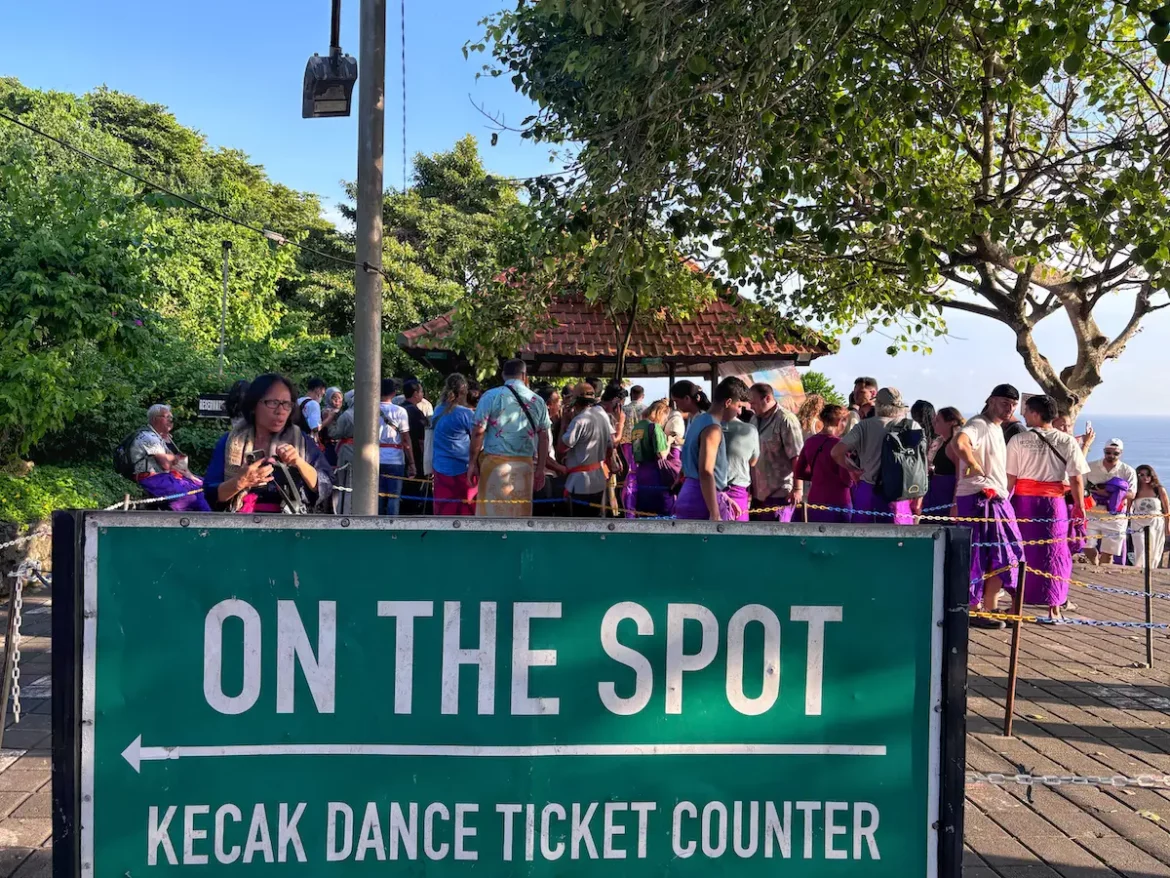
| Where it's purchased | Ticket counter at the main entrance gate | Separate Kecak counter or online in advance |
| Typical price tier | 50,000 IDR per person (international adult) | Mid-tier, sold apart from entry, priced separately |
| Required for temple grounds | — | |
| Required for the dance | — | |
| See tickets & prices |
Verdict: Visitors who only want to explore the clifftop grounds need the entrance ticket alone, but anyone planning to watch the evening show should budget for both tickets, since this skip-the-line Uluwatu Temple tour still requires the Kecak add-on separately.
Worth it, especially paired with sunset
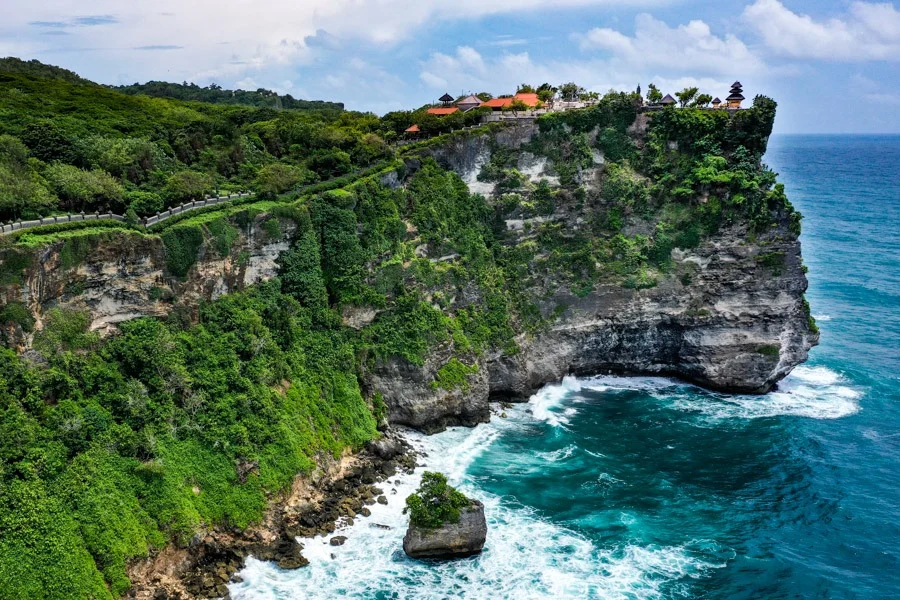
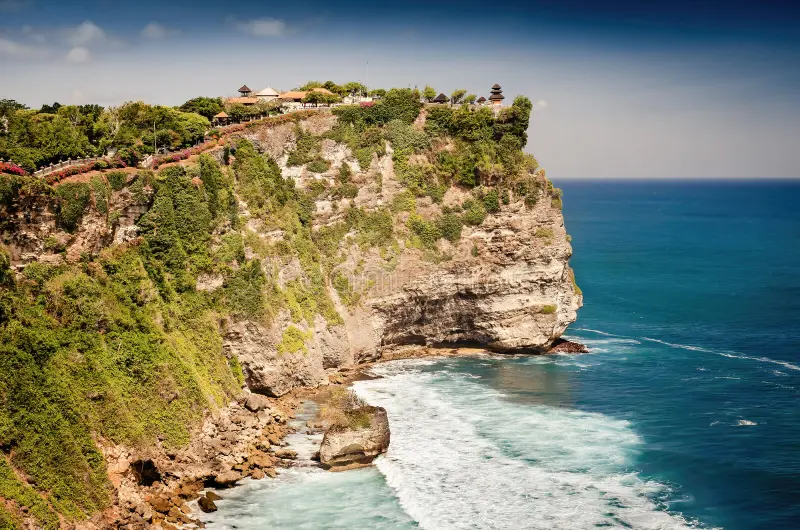
Uluwatu Temple Tickets cost 50,000 IDR for international adult entry, and at that price the value math is not close. You get clifftop access along a limestone headland roughly 70 metres above the Indian Ocean, the sea-facing pura grounds themselves, the paved cliff walkways in both directions, and the resident long-tailed macaques that patrol them. For under the price of a beachfront cocktail in Seminyak, that is a lot of coastline. Pura Luhur Uluwatu is one of Bali's six sea temples, and the Kecak fire dance staged in the amphitheatre at dusk is charged separately, which is where the real decision sits. Sunset chasers, first-timers and photographers get their money back within ten minutes. Travellers who have already seen Tanah Lot and want quiet contemplation will find this the busiest of the Bali landmarks. Book Uluwatu Temple Tickets tours only if you want transport bundled in.
Bottom line: Buy the Uluwatu Temple Tickets tickets, arrive between 16:00 and 18:00, and treat the Kecak seat as the upgrade worth budgeting for — a single Uluwatu Temple Tickets tour rarely delivers this much coastline for so little.
Hand-picked experiences loved by thousands of travelers
2 - 6 hours
Free Cancellation
Cliff-top temple views, playful monkeys, and a golden Bali sunset—with an optional Kecak Dance finale.
8-9 hours (2-9 hours range depending on itinerary)
Free Cancellation
Ocean cliffs, Balinese heritage, and a fiery sunset Kecak dance—all in one epic South Bali day.
8 hours
Free Cancellation
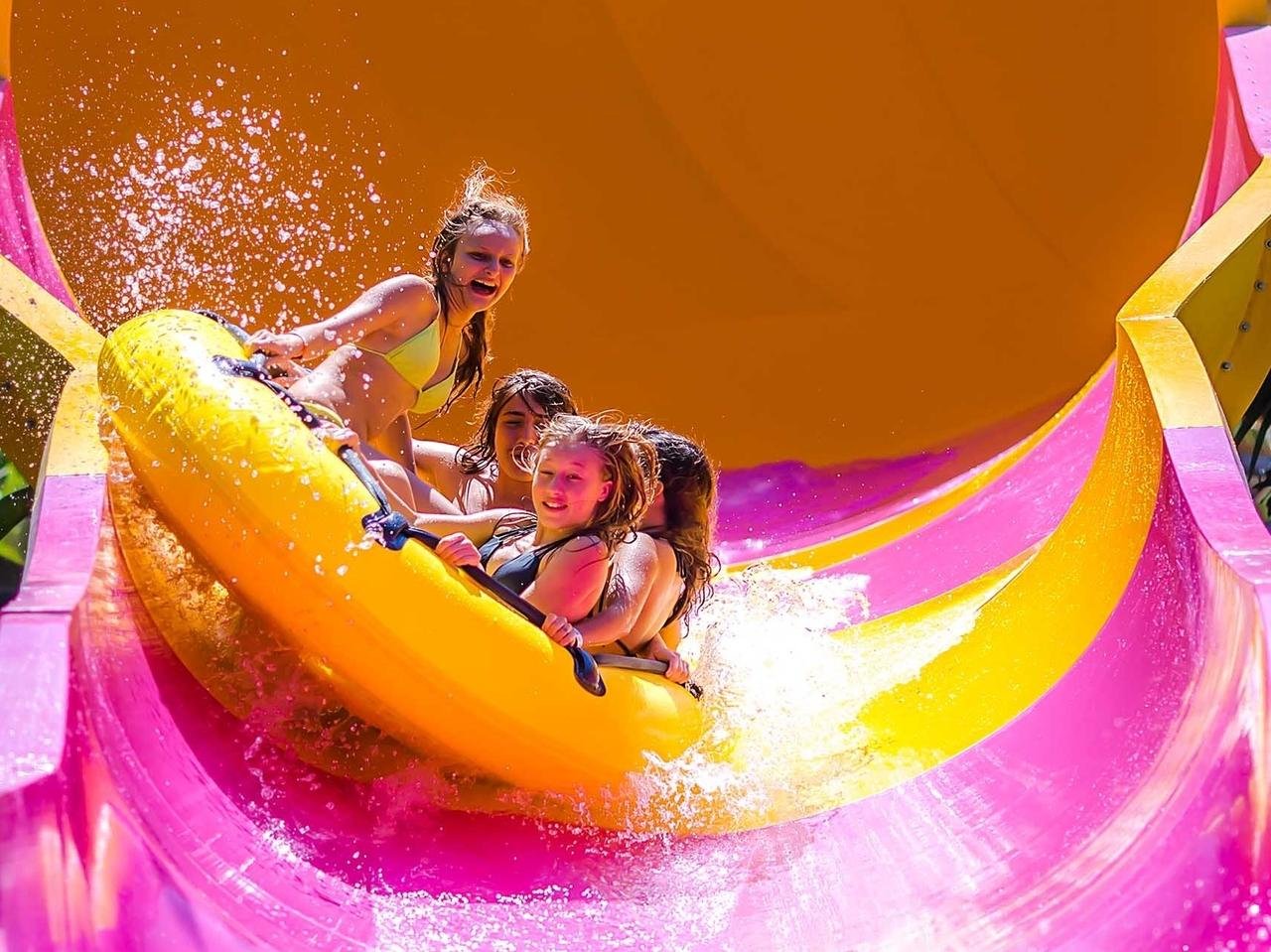
Slide into fun at Waterbom Bali, then catch cliffside temple views and a sunset Kecak show.
Buy Uluwatu Temple Tickets at the gate and receive the free sarong and sash
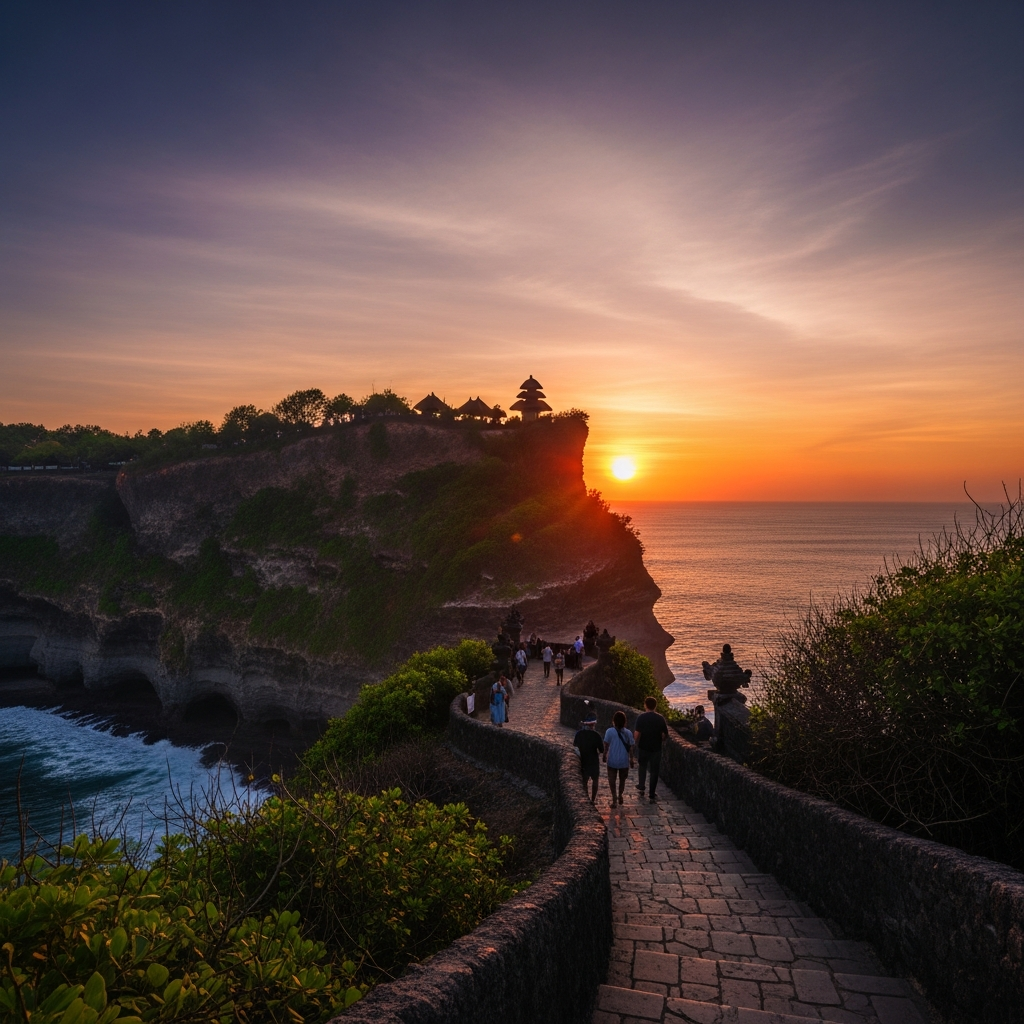
Follow the paved trail along the 70-meter limestone cliff edge, watching for macaques
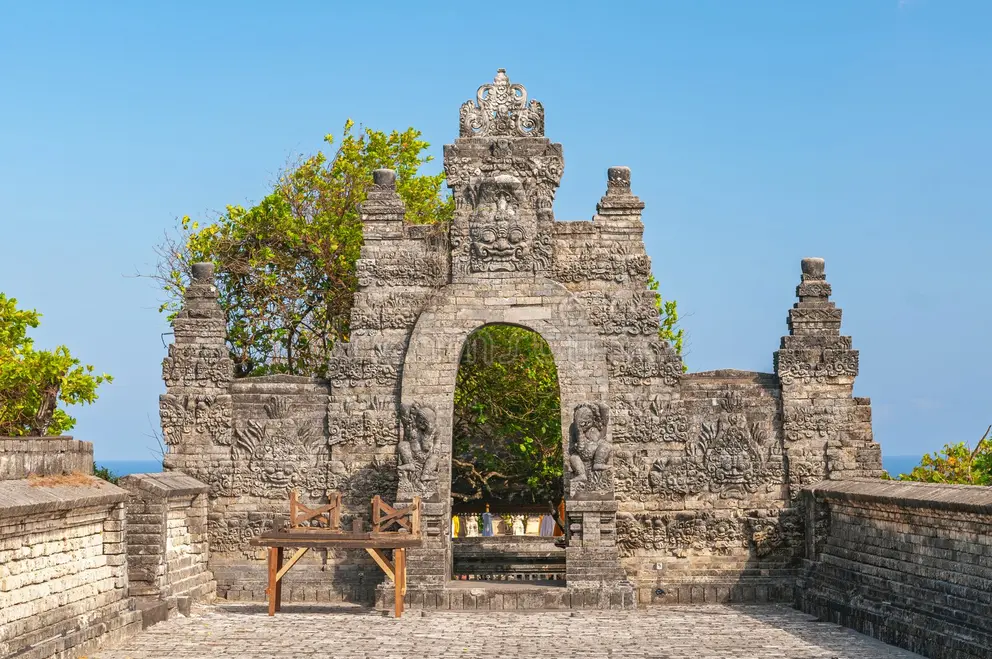
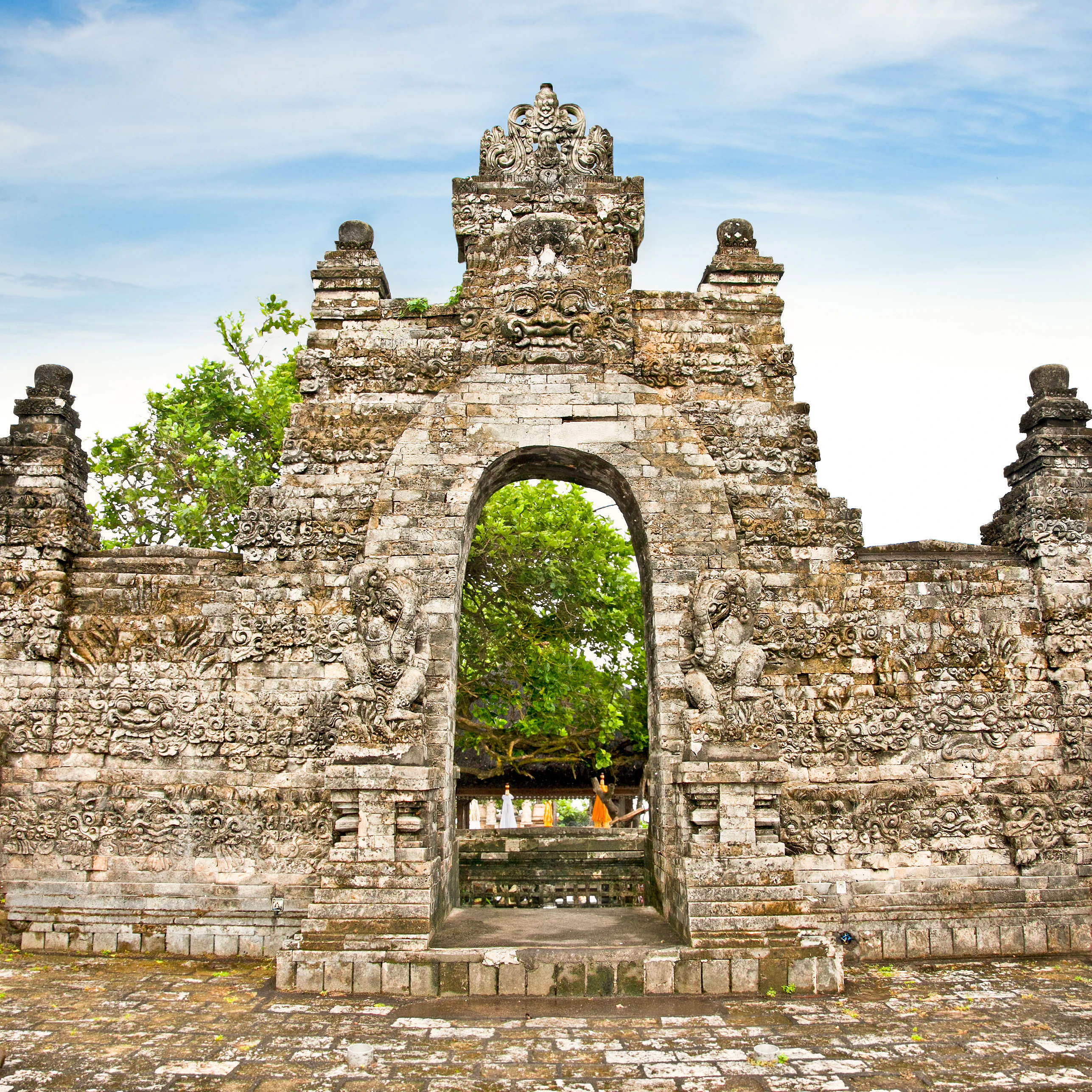
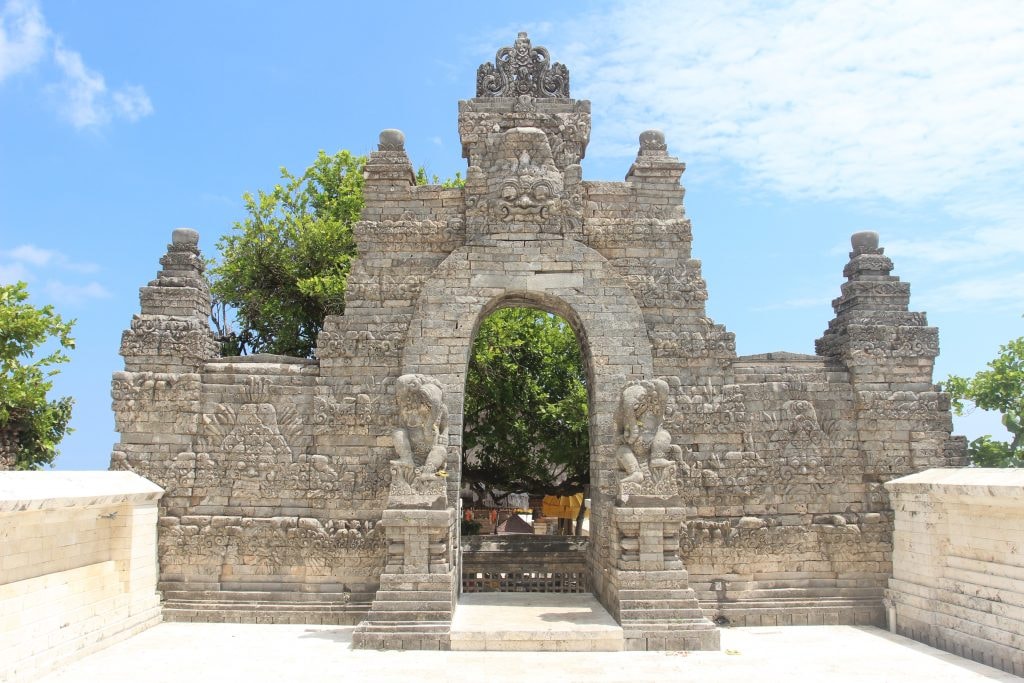
View the split gate (candi bentar) and carved reliefs from the public area
Arrive by 17:00 to secure a seat before the 18:00 Kecak Dance
Fifty to one hundred chanting performers stage the Ramayana story at sunset
Walk back to the parking lot as crowds disperse after the show
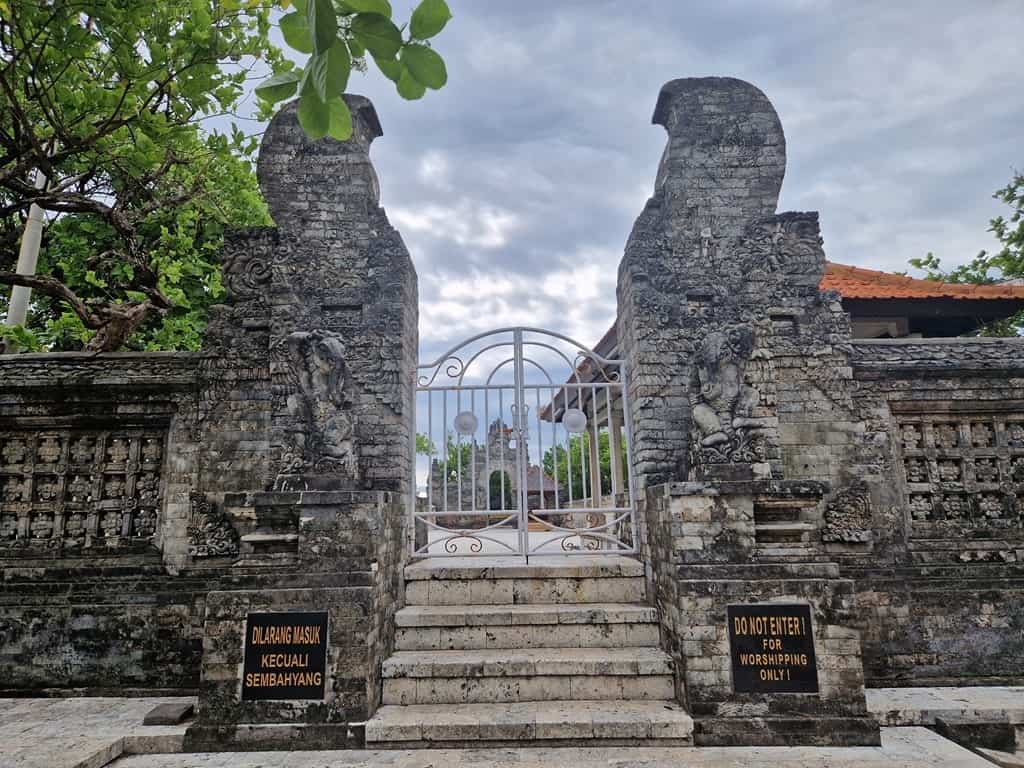
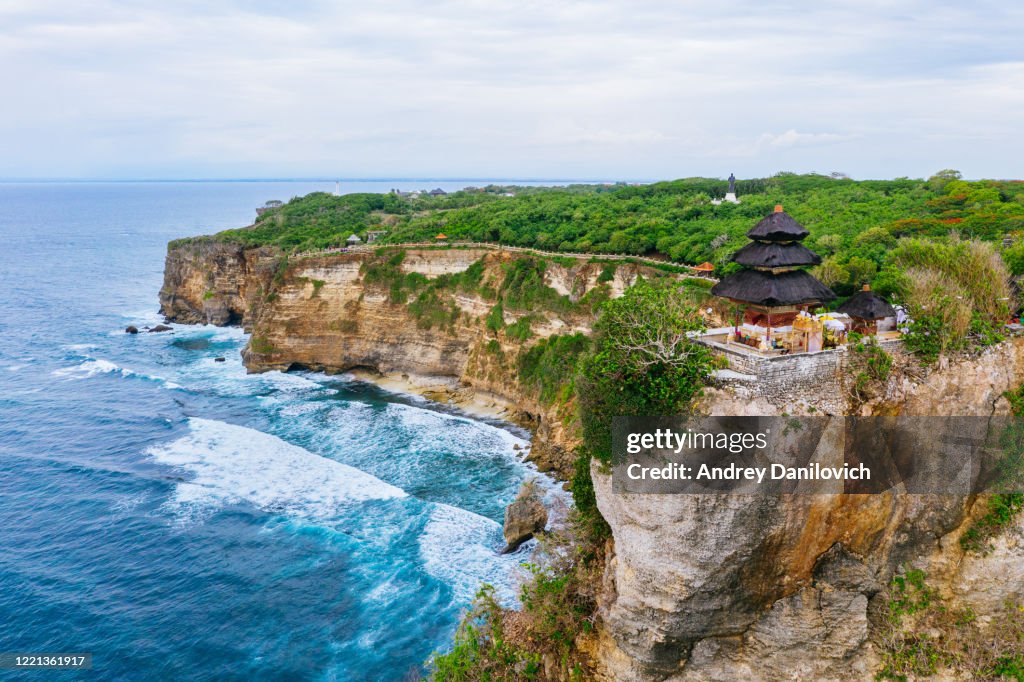
The principal shrine sits at the highest point of the temple complex, dedicated to the deity Rudra as guardian of the sea. Non-worshippers cannot enter the inner courtyard, but the black coral-stone gateway is visible from the public path.
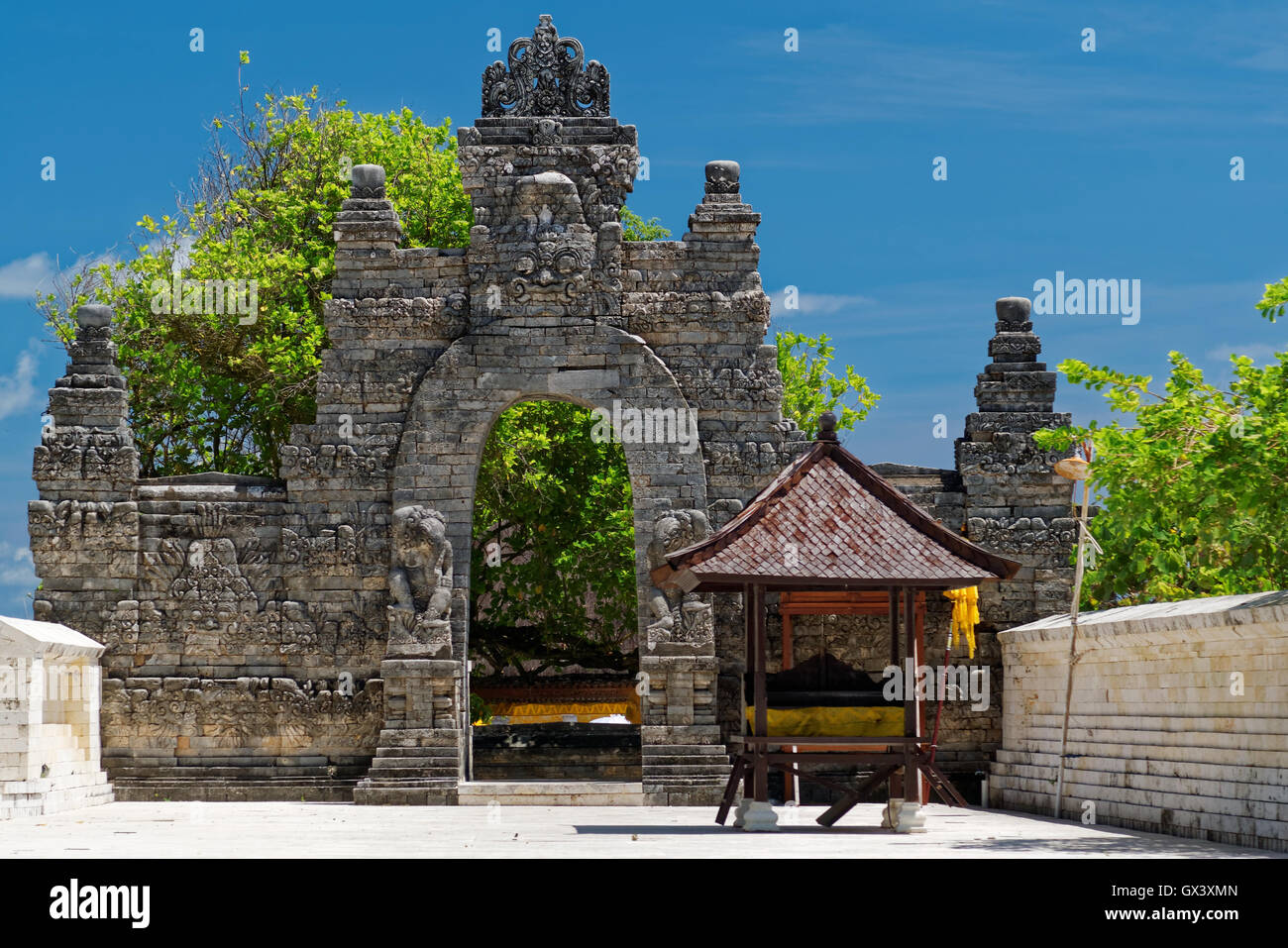
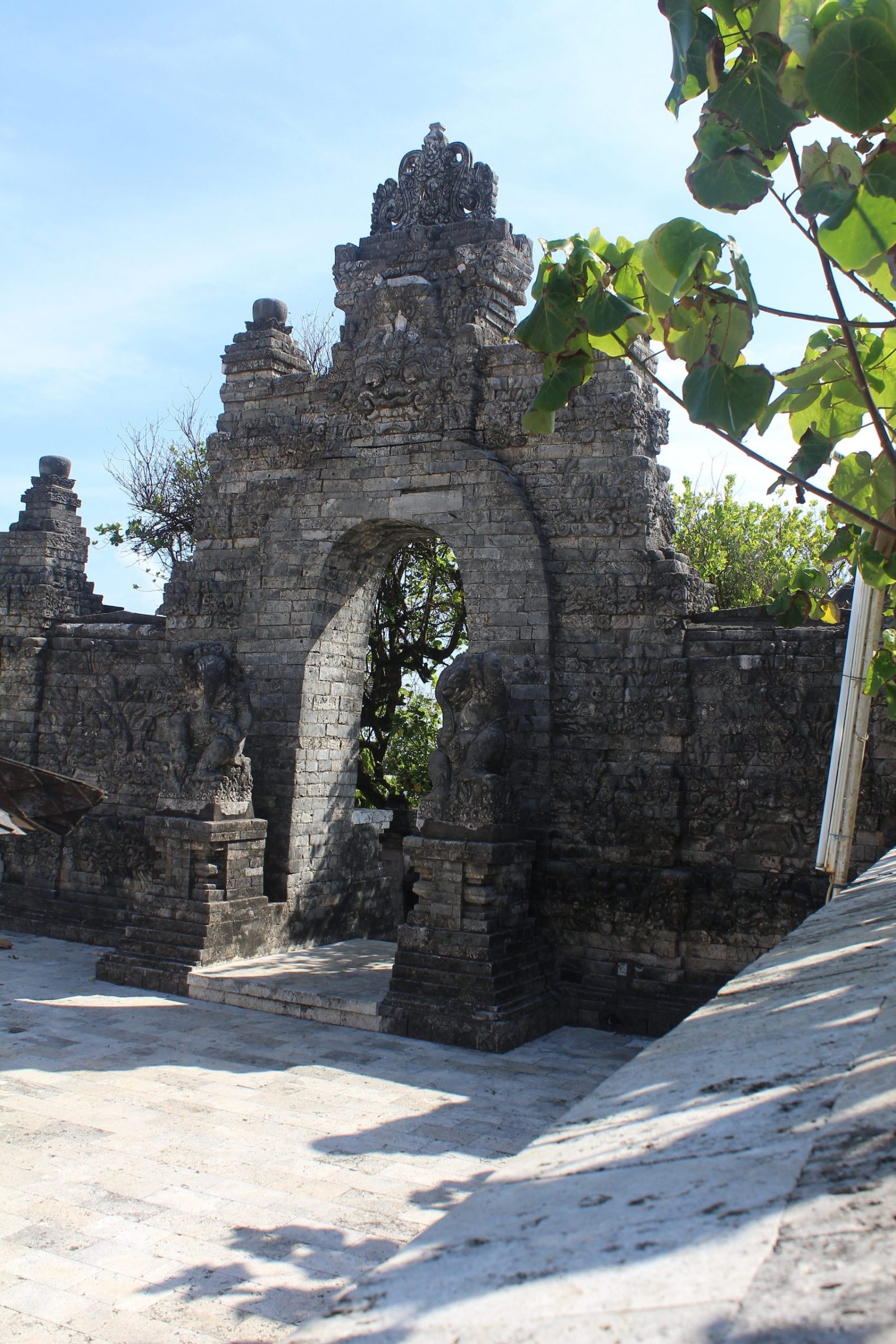
This iconic split entrance gate, carved from local volcanic stone, frames views of the Indian Ocean beyond and marks the symbolic threshold between the outer and inner temple grounds. Its twin towers are a recurring motif across Balinese temple architecture.
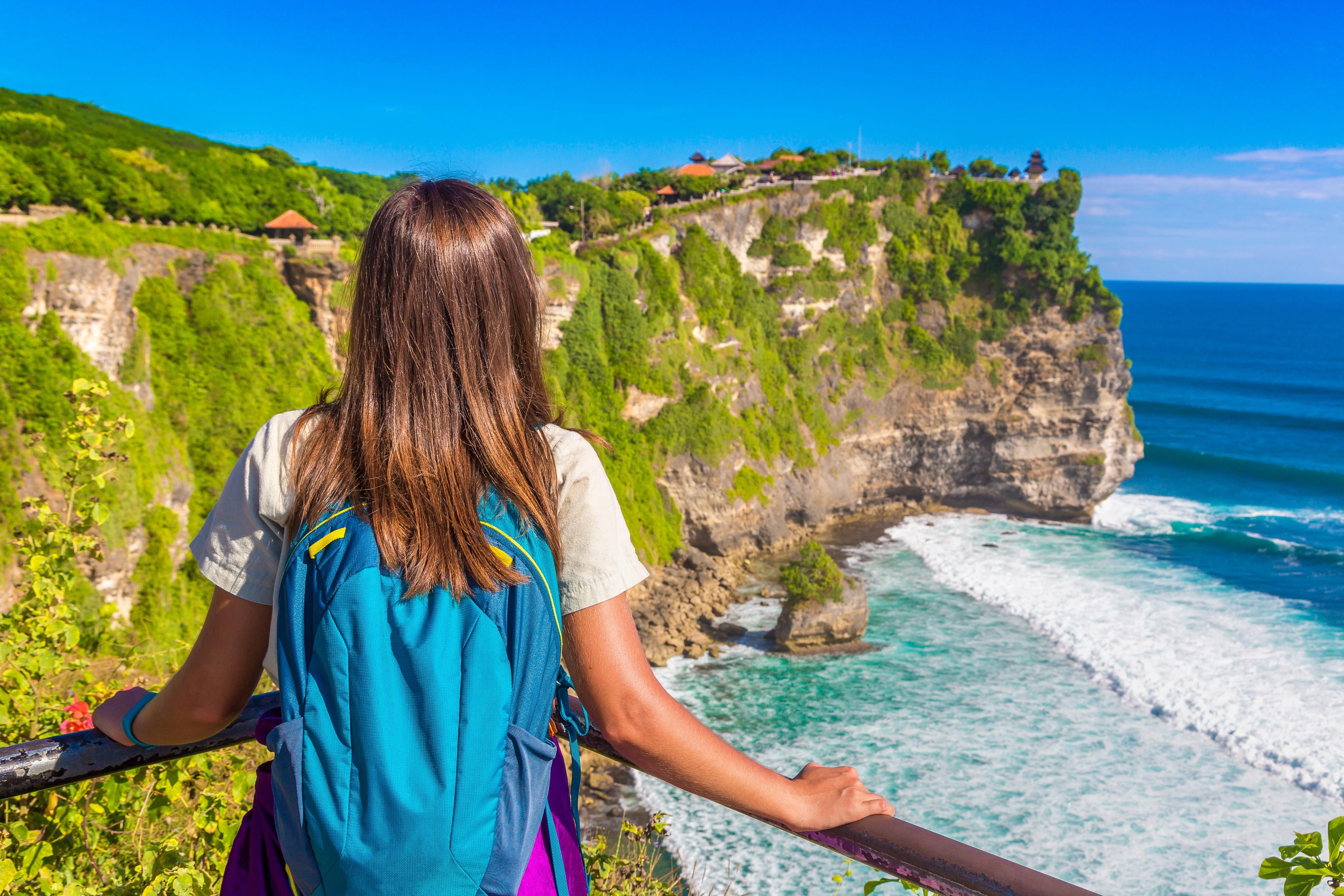
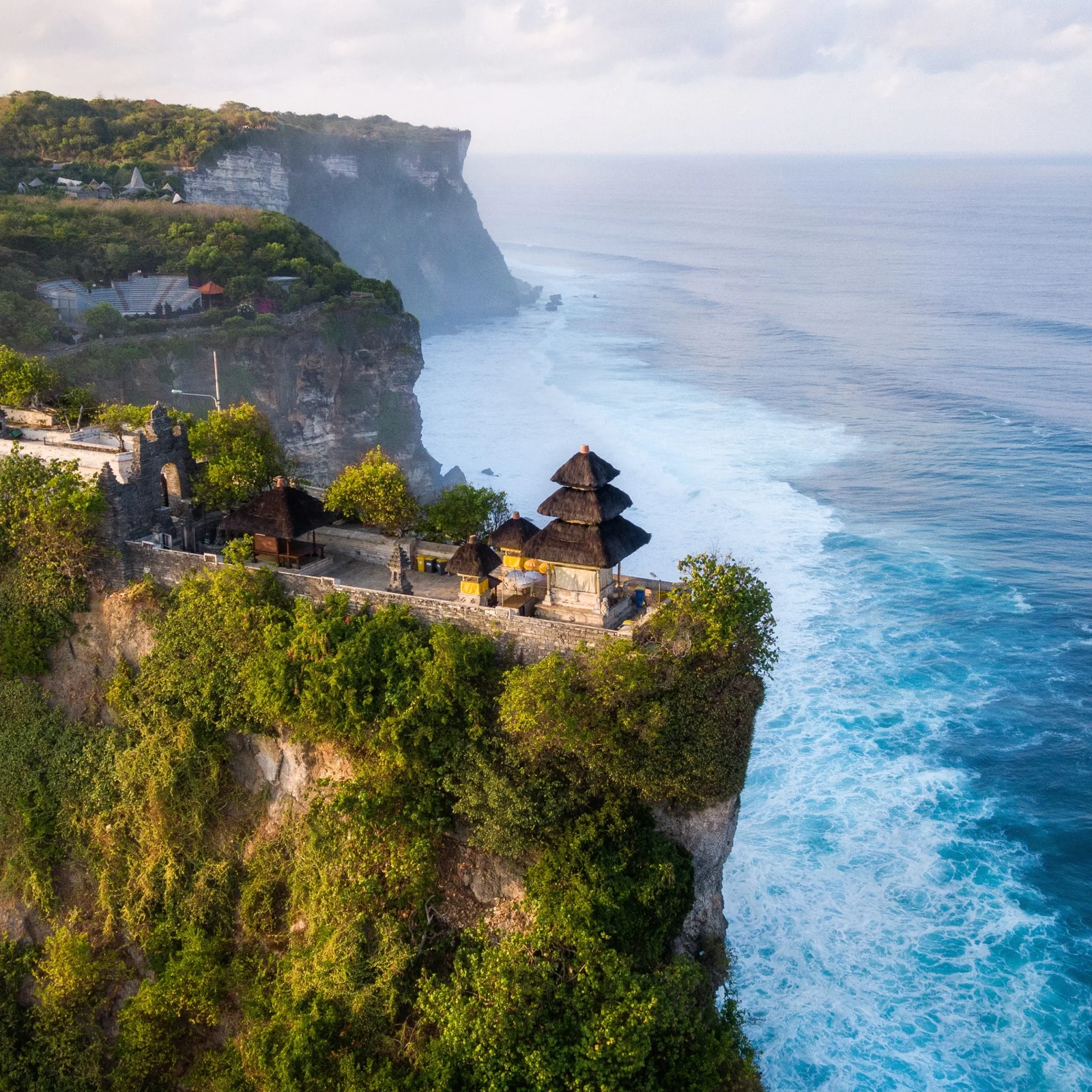
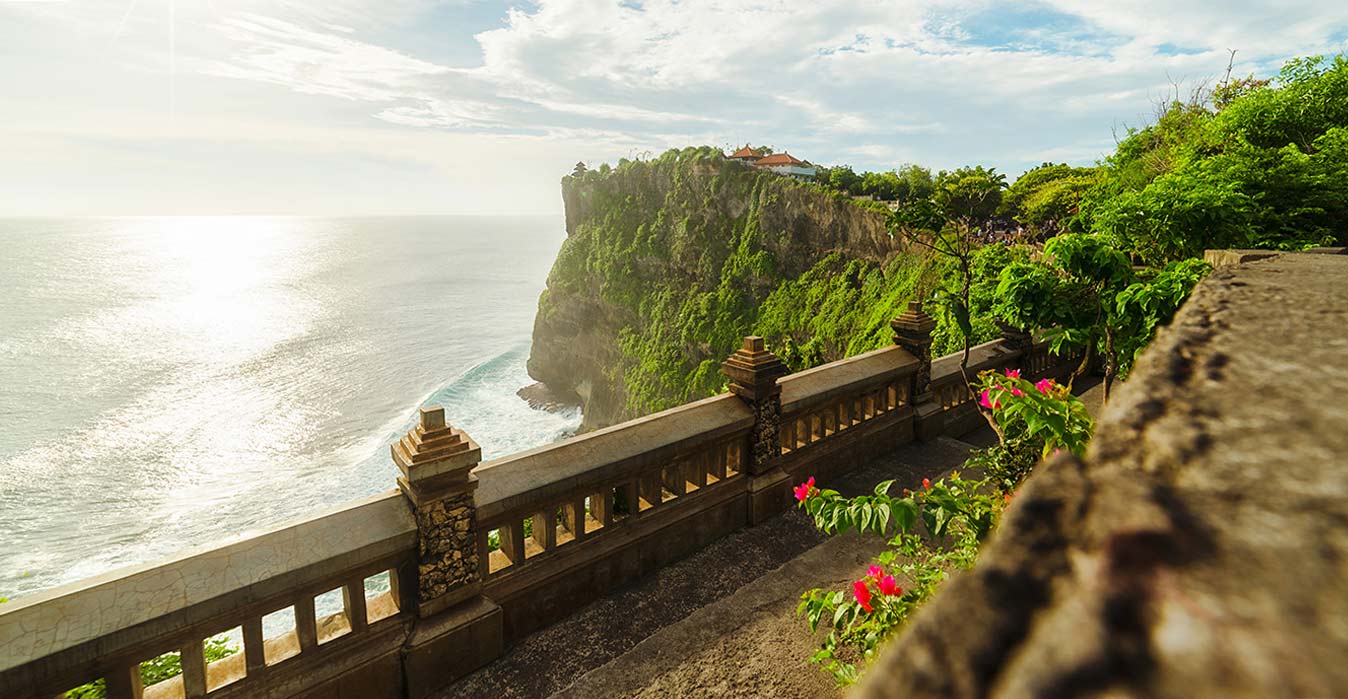
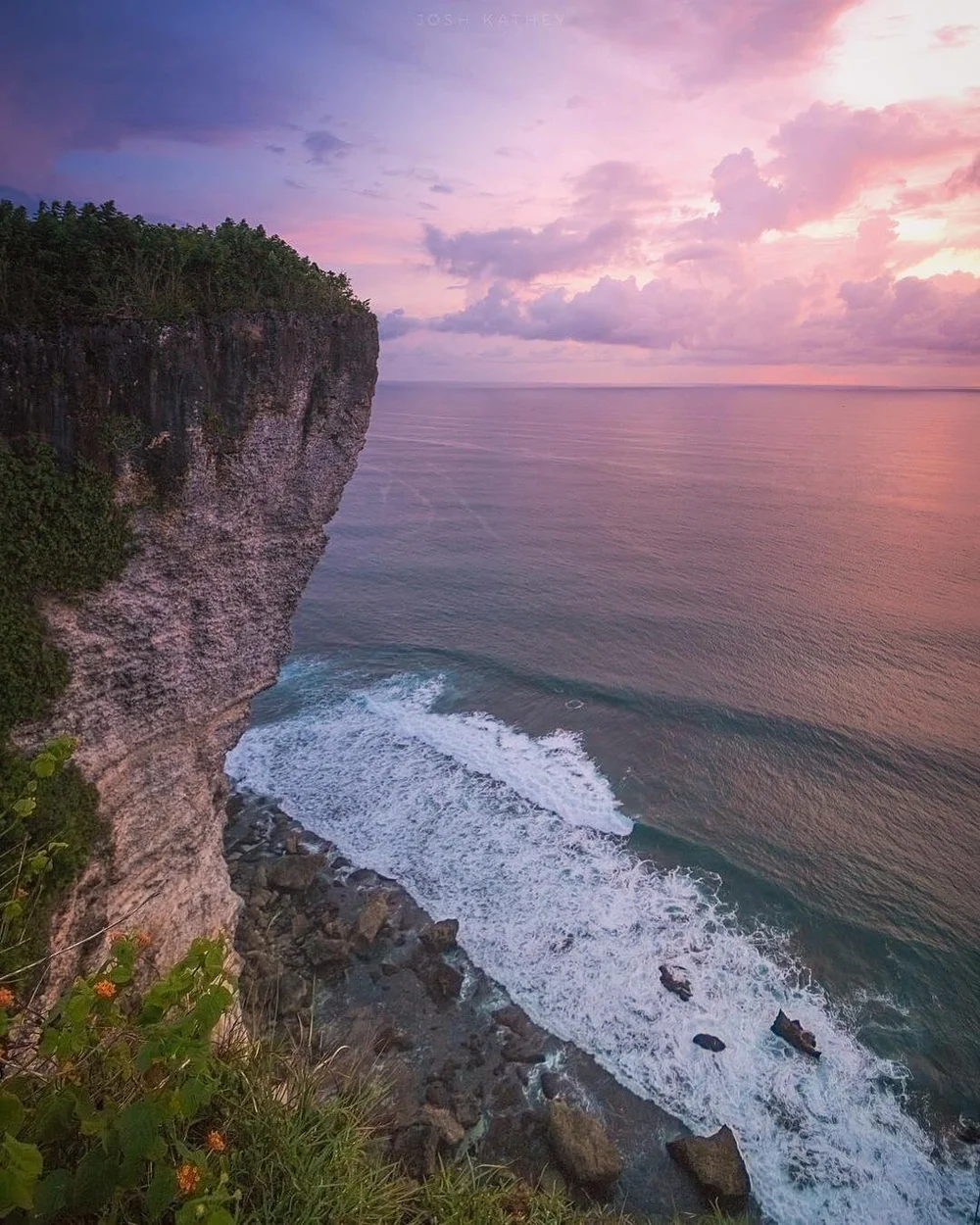
A roughly 70-meter-high limestone cliff trail wraps around the temple's seaward edge, offering some of the most photographed ocean panoramas on the Bukit Peninsula. The path has no shade and can take 30 to 45 minutes to walk in full.
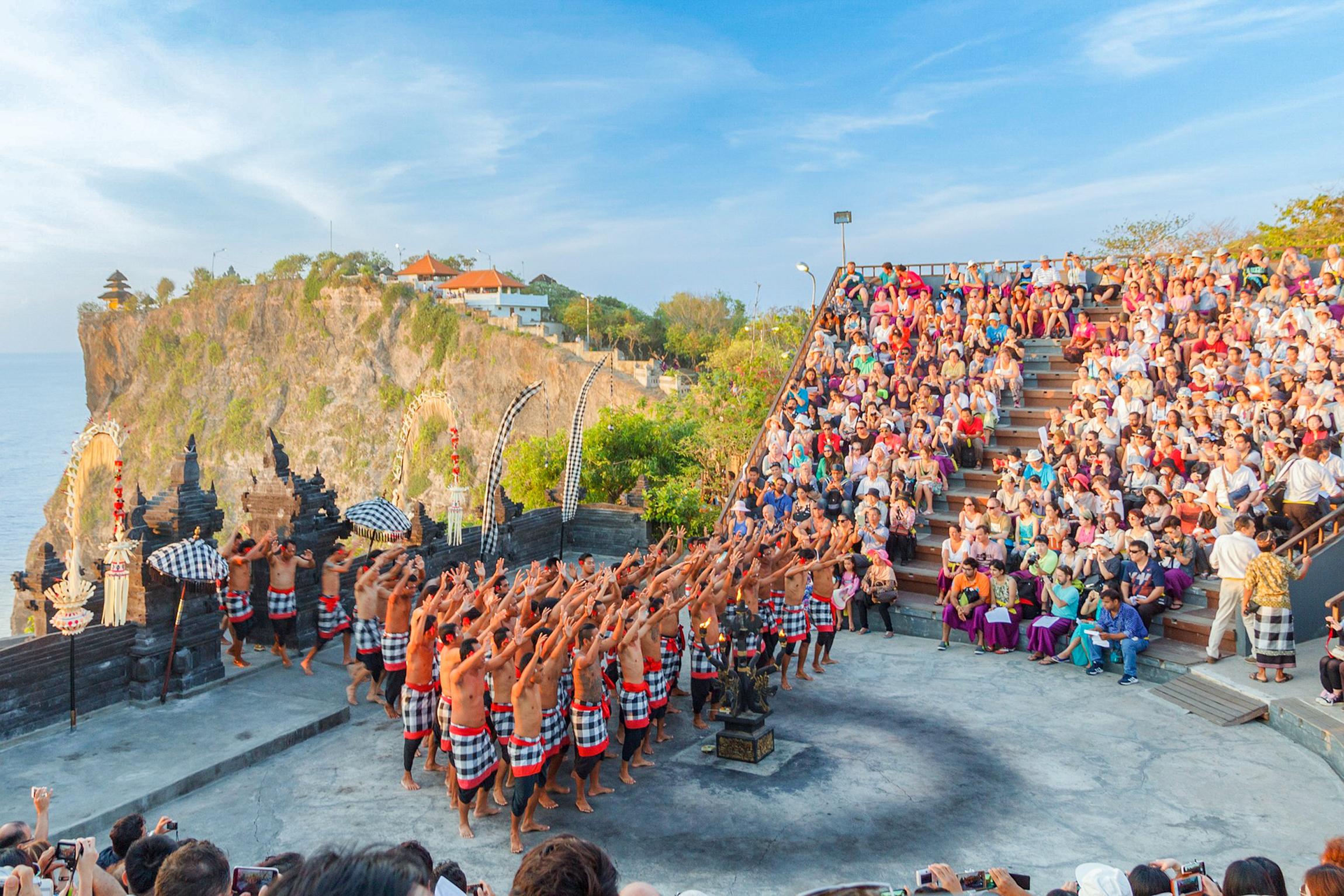
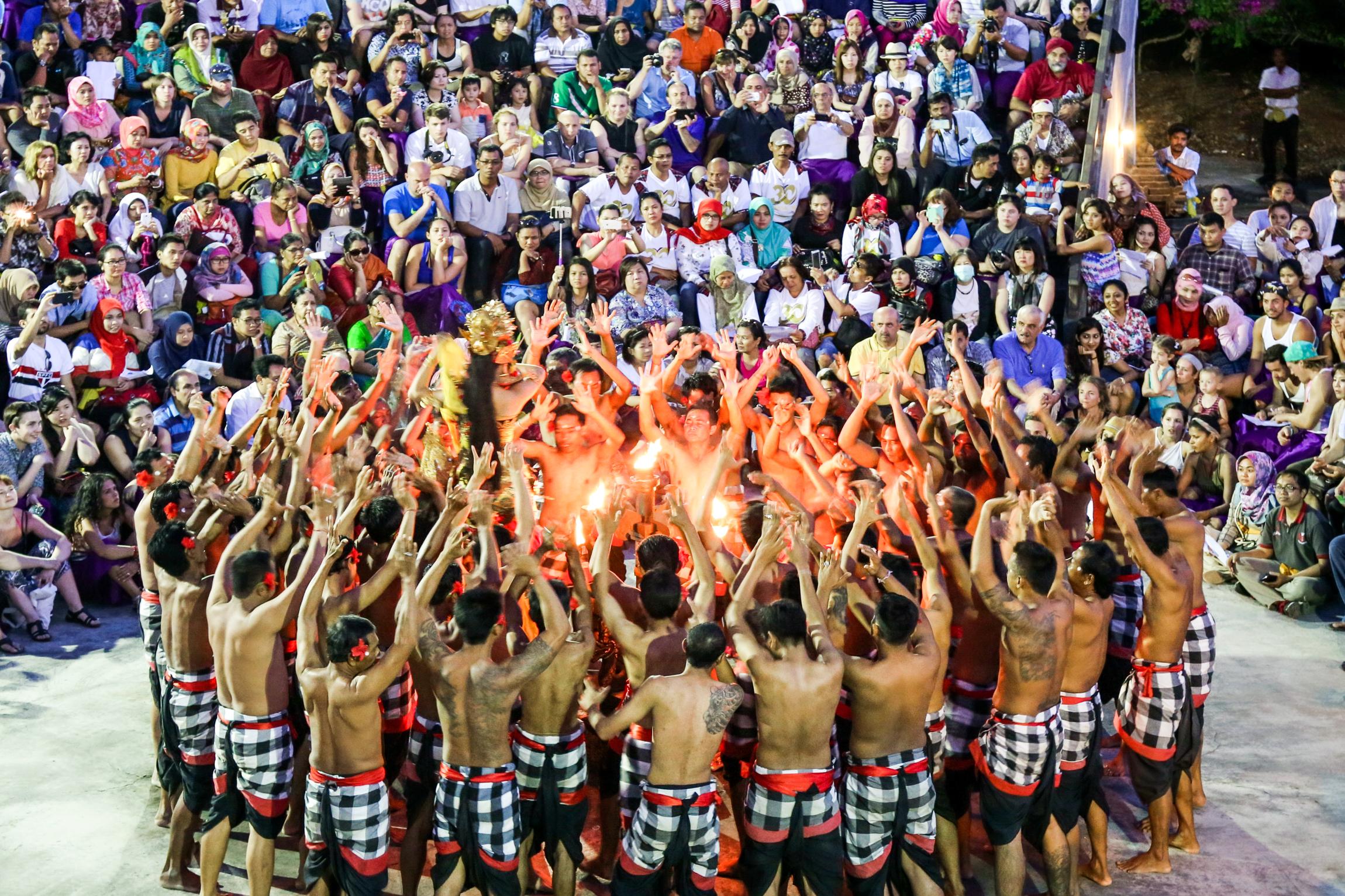
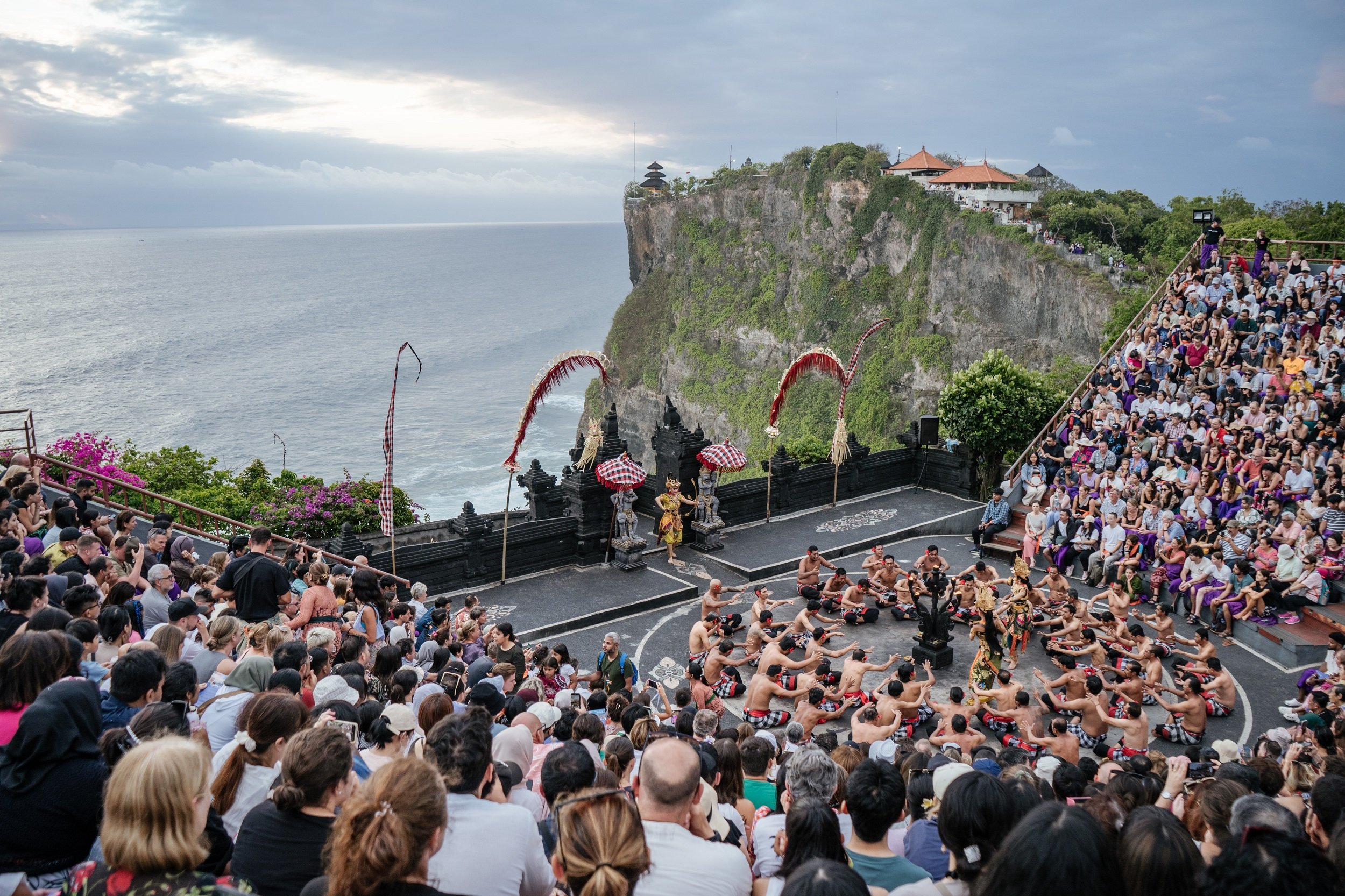
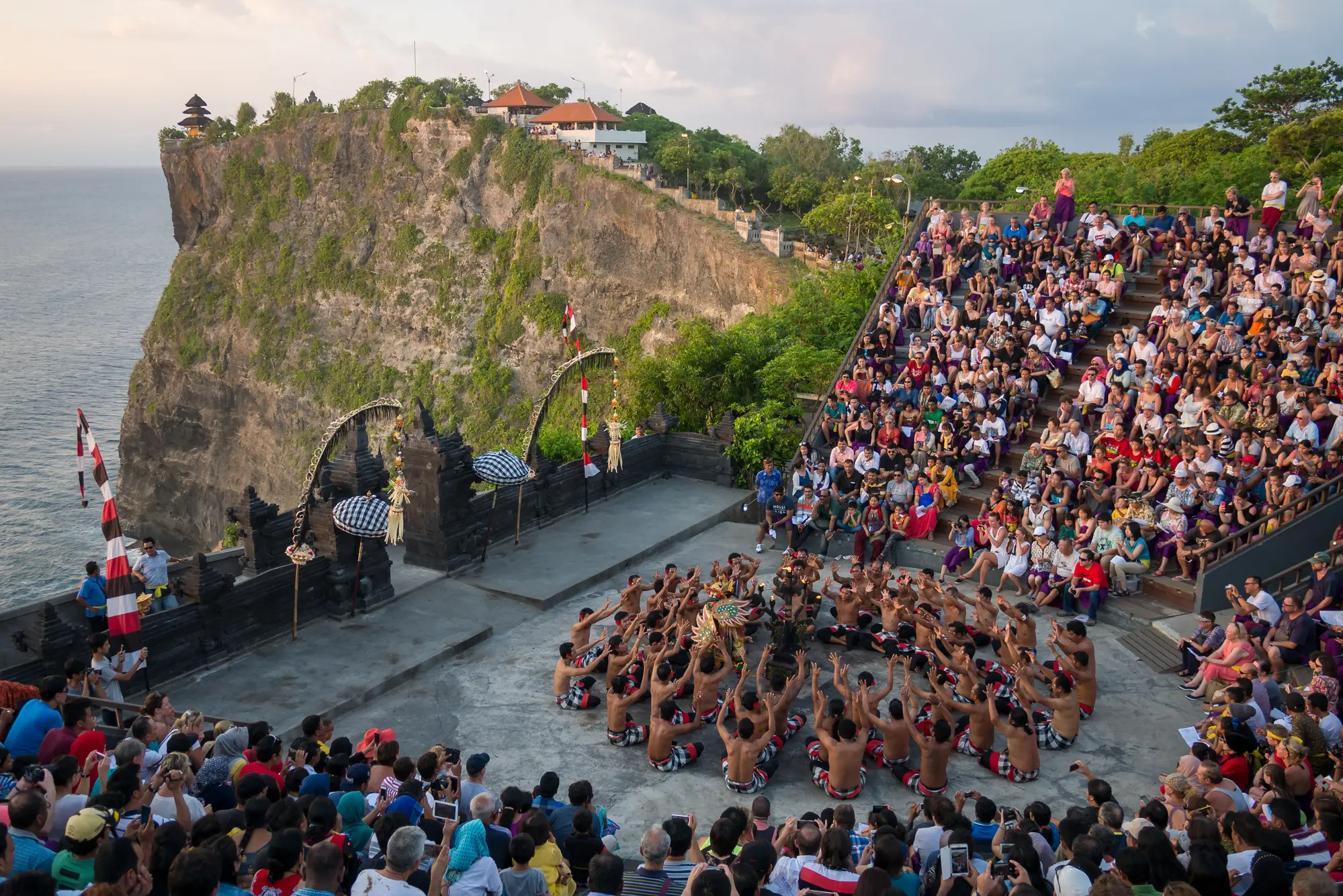
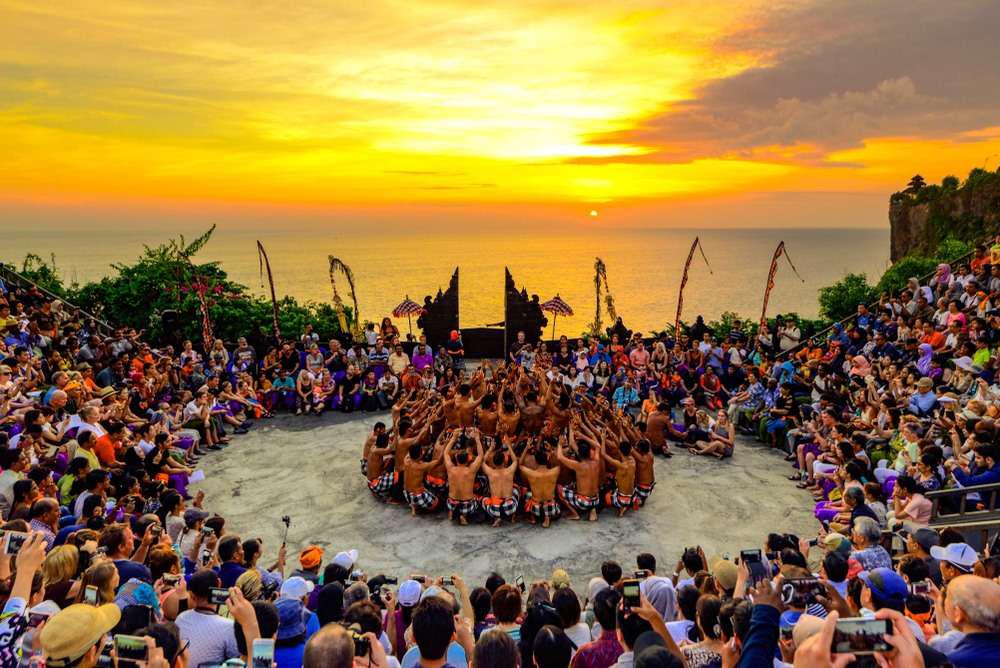
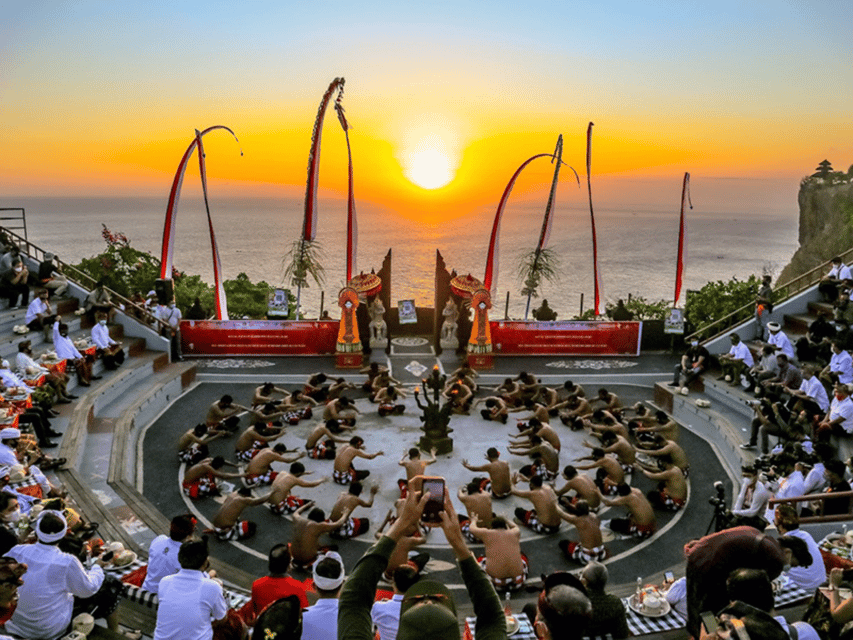
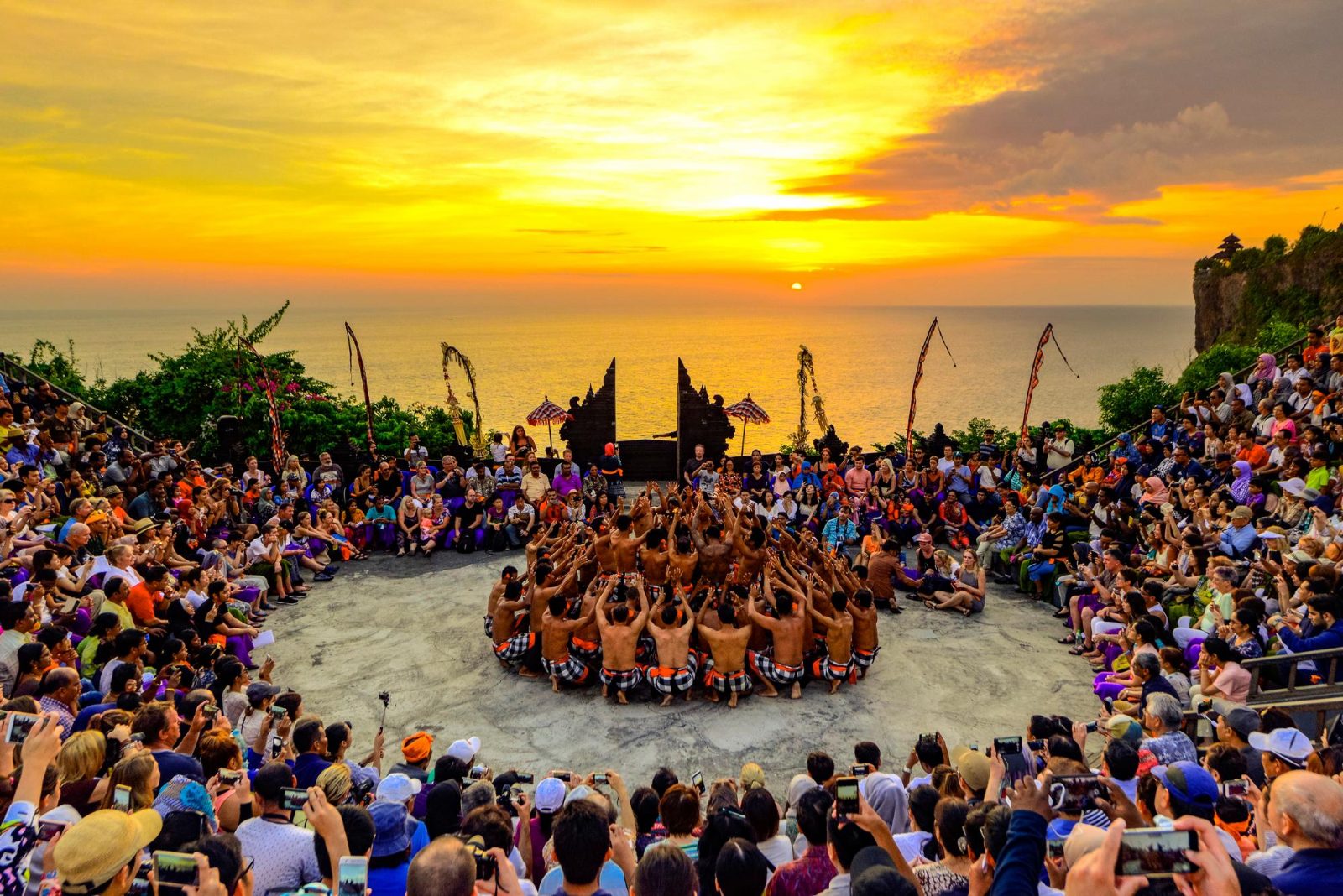
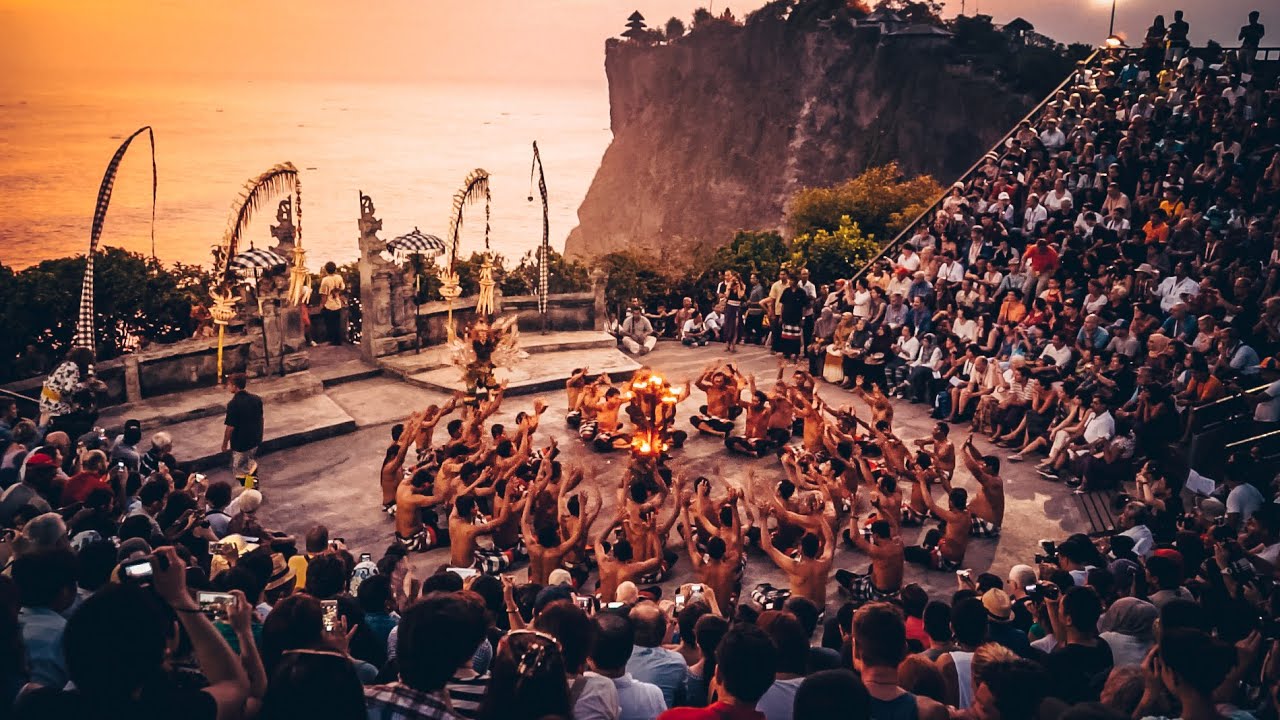
This open-air, circular stone amphitheater seats roughly 1,200 people and hosts the nightly Kecak fire performance, in which 50 to 100 bare-chested performers chant in unison without any instrumental accompaniment. Shows typically start at 18:00 and run about an hour, timed with sunset.
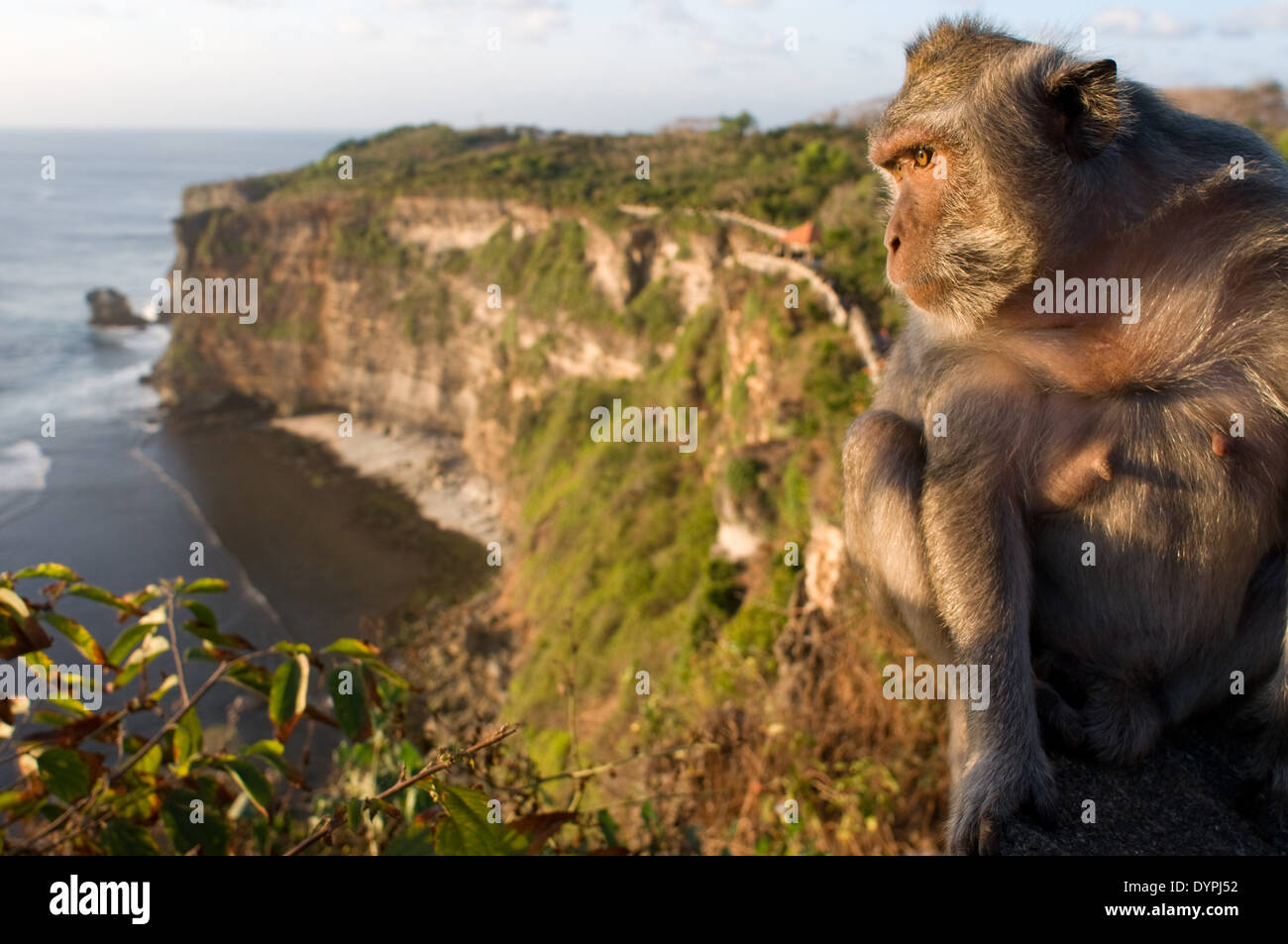
Long-tailed macaques inhabit the wooded stretch of the clifftop path and are known island-wide for snatching sunglasses, hats, and food from visitors. Temple handlers sometimes trade fruit to recover stolen items, a practice unique to this site's monkey population.
Carved stone reliefs along the outer courtyard walls depict scenes from Balinese mythology and are among the oldest surviving stonework at the site, believed to date to the temple's early construction. The reliefs remain visible to all visitors without entering restricted areas.
You arrive between 16:00 and 18:00, when the heat has broken and the light has started to angle. At the entrance you pay 50,000 IDR and collect a sarong and sash — you tie them yourself, or an attendant does it faster. Secure your sunglasses inside a bag before you pass the gate.
The macaques watch the treeline and they are patient.
You take the clifftop path left of the main complex first. It runs along the headland for a few hundred metres, and the drop opens on your right the whole way. You stop at the low wall where the stone has been worn smooth by hands. Below, surf breaks over reef in long white lines. You look back and the temple's split gate is silhouetted against the water.
By 17:30 you find the amphitheatre and take a seat — the upper tiers give you the full horizon behind the performers, the lower ones put you close to the chant. Around seventy men enter, sit in rings, and begin. The sound builds without instruments. You watch the sun drop through the last act of the uluwatu temple kecak dance, and Hanuman crosses the burning husk while the sky is still orange.
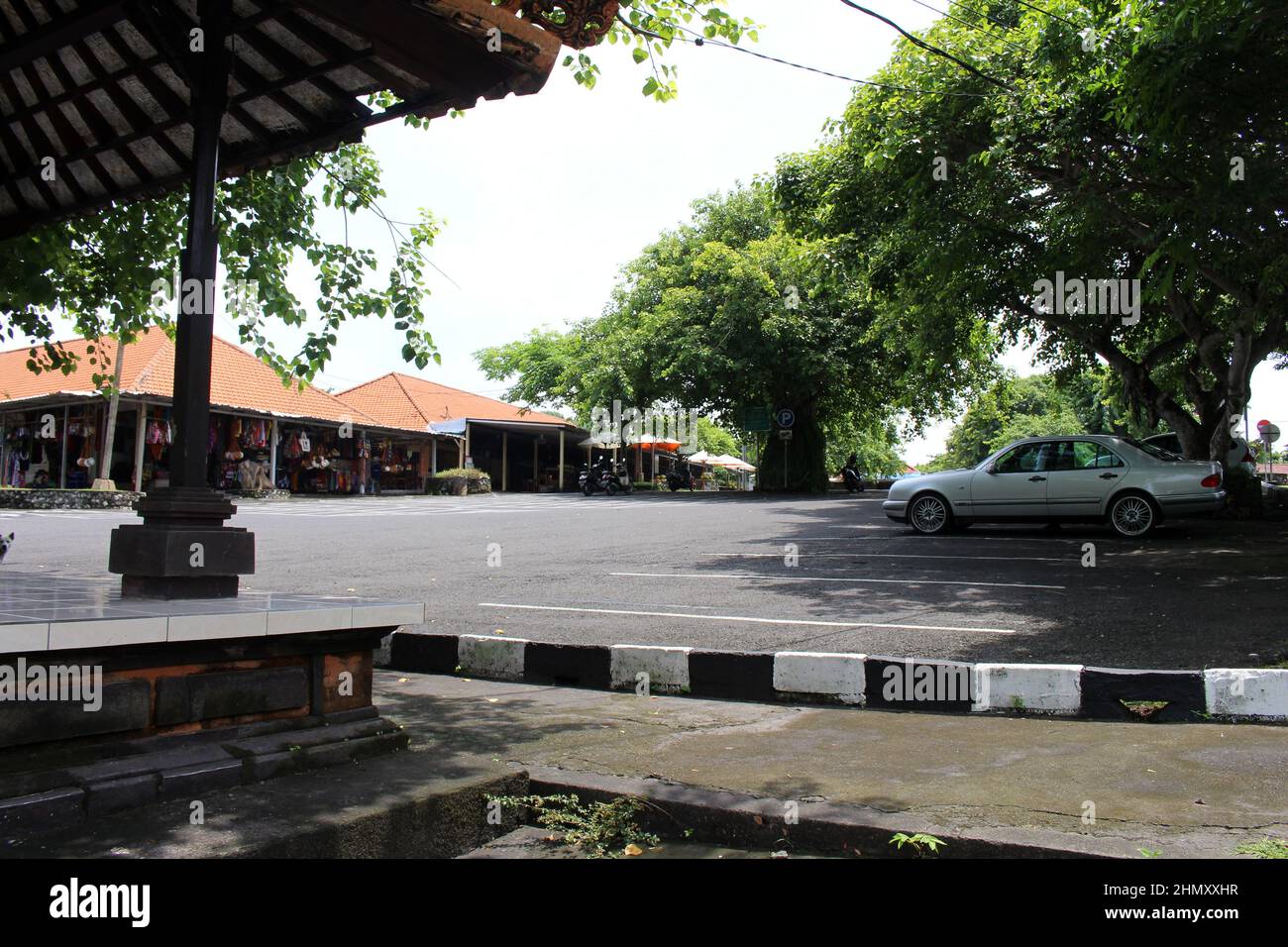
You leave with the crowd afterward, past the vendors on the exit path. The temple closes at 19:00 and the parking area empties slowly.
All the details about your upcoming adventure in one place
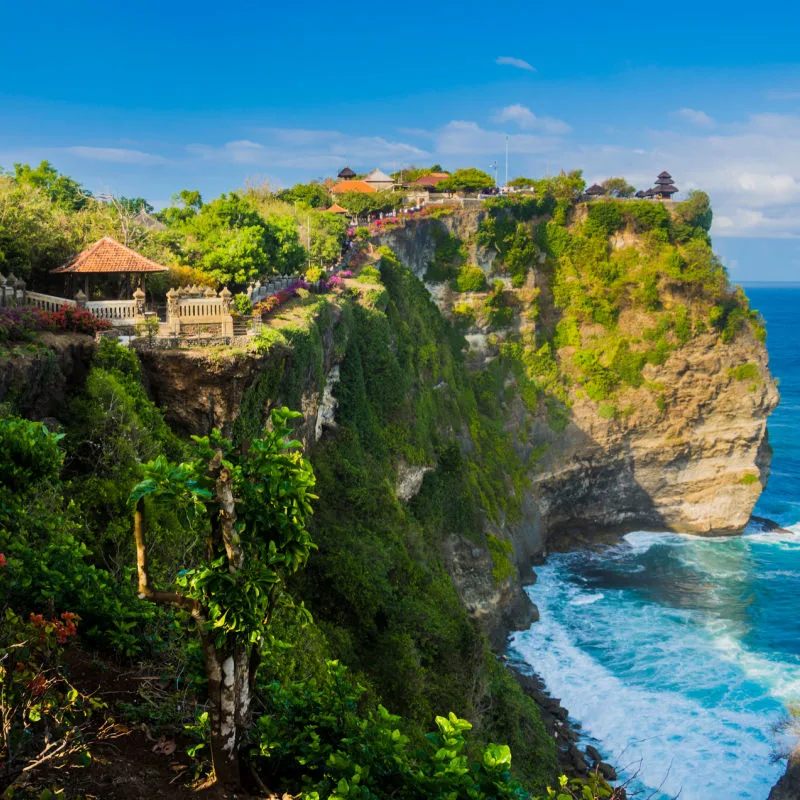
Pura Luhur Uluwatu sits on a limestone cliff roughly 70 metres above the Indian Ocean, one of Bali's six sad kahyangan directional temples guarding the island's spiritual balance. Uluwatu Temple Tickets tours bring you along the paved clifftop path past coral-stone gateways and the split candi bentar entrance, with long stretches of open sea on one side. Grey long-tailed macaques live freely across the grounds, so keep sunglasses, phones and loose jewellery packed away.
The limestone headland at Pecatu drops seventy metres straight into the Indian Ocean, and the temple that crowns it has no railing worth the name. Pura Luhur Uluwatu is one of the six sad kahyangan — the pillar sanctuaries Balinese Hindus believe hold the island's spiritual balance in place.
Tradition credits its founding to the Javanese sage Empu Kuturan in the eleventh century, with the sixteenth-century priest Dang Hyang Nirartha said to have attained moksha here. That is the frame; the rest belongs to stone and salt air.
What draws travellers securing Uluwatu Temple Tickets today is less the chronology than the position. The inner sanctum sits at the cliff's edge, oriented toward the open sea rather than inland toward Gunung Agung — an inversion that marks Uluwatu as a guardian temple, facing the direction from which danger arrives. Coral-rock walls have weathered into a pale grey that reads almost white at midday and turns bronze near closing. The split gate, or candi bentar, is carved with winged figures rather than the usual floral registers. Two Ganesha statues flank the approach. The whole complex is compact — the walk along the clifftop path matters more than the built area.
Macaques hold the grounds as a resident population, tolerated because the temple's own mythology grants them standing. They are also opportunists, and the loss of sunglasses here is common enough to be a local joke.
The amphitheatre south of the main gate is where the site's second reputation was built. The uluwatu temple kecak dance has been staged there daily since the 1970s, adapting a trance chant into a performance of the Ramayana narrated by roughly seventy men in concentric rings. No gamelan accompanies it — the chorus itself is the orchestra. The closing sequence, the uluwatu temple fire dance, sends Hanuman through a ring of burning coconut husk as the sun drops behind the horizon line. Visitors arriving on Uluwatu Temple Tickets tours often describe the acoustic effect before the visual one: the chant carries over the surf without amplification.
Bali holds thousands of temples, and many are older, larger, or more elaborately carved. Uluwatu's claim rests on siting. The architecture is deliberately modest so that the geography can do the work — a principle Balinese builders applied consistently at cliff and lake sanctuaries across the island. The temple is open daily, 07:00–19:00, and remains an active place of worship rather than a museum; ceremonies proceed regardless of visitor numbers, and the inner courtyards stay reserved for those who come to pray. Guests booking Uluwatu Temple Tickets tickets or joining a kecak dance uluwatu temple performance are guests in a working sanctuary, and the distinction is visible in how the grounds are kept.

The architecture is deliberately modest so that the geography can do the work.
Pura Luhur Uluwatu requires shoulders and knees covered before entering temple grounds, and staff hand out a sarong and sash free of charge at the ticket gate for anyone in shorts or a short skirt. Visitors already in long trousers or a maxi dress typically only need the waist sash. Swimwear and beachwear alone are not accepted past the entrance.
There is no metal-detector or bag-scanning checkpoint at Uluwatu Temple, but the resident long-tailed macaques actively target open bags, so zip closures and cross-body straps are strongly advised. Staff near the cliff path can help retrieve items a monkey has snatched by trading fruit for the object. Valuables should be kept out of side pockets while walking the clifftop trail.
Personal photography and video are permitted throughout the outdoor temple grounds and along the clifftop walkway. Flash photography is discouraged near anyone praying, and visitors must never stand higher than an officiating priest during an active ceremony. Tripods are generally fine outside the inner courtyard (Jeroan), which remains off-limits to non-worshippers regardless of camera equipment.
Children are welcome at Pura Luhur Uluwatu, and the open clifftop paths and monkey sightings tend to hold their attention, though parents should keep a firm grip on young hands near the unguarded cliff edges. The evening Kecak Dance runs long for very young children, so families with toddlers may prefer a daytime visit instead. Strollers struggle on the uneven stone sections, and a carrier is often more practical.
The main clifftop path is paved but includes uneven stone sections, moderate inclines, and low balustrades that make it difficult for wheelchair users to complete the full loop unassisted. A companion or temple attendant can help navigate the steeper stretches near the amphitheater. Level ground near the main entrance and parking area is comparatively easy to access.
Food should not be carried openly on the clifftop path, since visible snacks tend to draw aggressive monkey behavior. Bottled water is fine to carry discreetly. Eating and drinking are not permitted inside the temple courtyards themselves, only in the outer grounds near the parking and entrance area.
Kecak Dance at 18:00
Busier with weekend arrivals
Heaviest crowds of the week
Hours
Open daily 07:00–19:00, Kecak Dance performance starts 18:00
Address
Pura Luhur Uluwatu, Pecatu Village, South Kuta District, Badung Regency, Bali 80361
Terrain
Paved cliffside paths with some uneven sections, limited wheelchair access
Climate
Exposed limestone clifftop, no shade, strongest sun 11:00–15:00
Bag policy
Zip bags recommended, macaques may grab loose items
Best arrival
16:00–18:00 for cooler temps, cliff views, and sunset timed with Kecak Dance
Car · 30–45 minutes from the airport · Parking fee applies on-site
Self-drive or hired car via Jalan Raya Uluwatu; Ngurah Rai International Airport is roughly 30 minutes away in light traffic
Taxi · 20–30 minutes from Jimbaran · Fare varies by distance
Metered taxi or app-based ride service from South Kuta or Jimbaran directly to the temple gate
Bike · 25–40 minutes from Kuta · Motorbike parking fee on-site
Scooter rental is common in South Bali and gives flexibility for combining nearby beach stops
Public transport · Varies · Not applicable
No direct public bus serves Uluwatu; most visitors rely on private transfers or ride-hailing apps
Uluwatu Temple Tickets purchased on-site are non-refundable once issued, since the 50,000 IDR entrance fee is collected as a same-day pass at the gate. Pre-booked Uluwatu Temple Tickets tours arranged through third-party operators typically allow free cancellation up to 24 hours before the scheduled visit, with refund terms set by the individual tour operator rather than the temple itself.
Recommended time
1-3 hours
Budget about an hour for the clifftop grounds alone, walking the cliff paths and outer courtyards at an easy pace; add another hour to hour and a half if you're staying for the sunset Kecak show, since the performance itself runs roughly 60 minutes. Booking Uluwatu Temple Tickets in advance won't skip the amphitheater queue, which forms early and fills on a first-come basis, so plan extra buffer time rather than expecting a fast entry. Crowds build steadily through the afternoon and peak hardest right before showtime, which is exactly why arriving inside the 16:00-18:00 window works: you beat the worst of the seating rush while still catching the cliffs at their most comfortable.
Crowd levels through the day
Weather · crowds · average price — dots go green to amber to red as each metric rises.
Rainfall is minimal and skies are generally clear, making this the most reliable window for sunset views and the outdoor Kecak Dance. Crowds peak around July and August school holidays.
Afternoon downpours can shorten or relocate the evening performance, and the clifftop path can turn slippery. Mornings are often still dry and less crowded.
This period sees the heaviest visitor numbers of the year due to Northern Hemisphere summer holidays, so early arrival for the Kecak Dance is important.
Weather stays mostly dry with noticeably thinner crowds than peak summer, making these some of the most comfortable months to visit.
Zip bags and remove hats, sunglasses, and dangling jewelry before walking the clifftop path, since the resident macaques are known to snatch shiny or loose objects.
Bring Indonesian Rupiah in small denominations, as the entrance gate and parking booths are largely cash-based and card machines are unreliable.
The clifftop trail has no shade, so a hat, sunscreen, and water are worth carrying even for a short visit.
Every visitor receives a sarong and sash at the gate regardless of outfit, so there is no need to buy or bring your own cover-up.
After the evening Kecak Dance ends, ride-hailing drivers become scarce near the parking area, so pre-booking a pickup avoids long waits.
Low barriers line parts of the walking path, so keep children and pets close and avoid stepping onto boundary walls for photos.
Some sections of the trail are uneven or slightly sloped, so closed-toe shoes offer better grip than sandals.
Pura Luhur Uluwatu, Pecatu Village, South Kuta District, Badung Regency
Where Uluwatu Temple Tickets and Kecak Dance tickets are both sold
Get directions
Adjacent to Pura Luhur Uluwatu entrance road
Common driver pickup point after the evening show
Get directionsThe cliff came first. Limestone, seventy metres above the Indian Ocean, at the southwestern tip of the Bukit Peninsula. Balinese tradition holds that the shrine here was established in the 11th century by Mpu Kuturan, a Javanese priest who arrived during the reign of Udayana and Mahendradatta. He is credited with introducing the three-shrine village temple system across Bali. Uluwatu was among his foundations. The name derives from ulu, meaning head or tip, and watu, meaning stone. Its second founder gave the temple its title. Dang Hyang Nirartha, a priest fleeing the collapse of the Majapahit court, reached Bali around 1546. He travelled the coast and, according to the chronicles, achieved moksha at Uluwatu — releasing himself from the physical world in a flash of light. The temple was thereafter called Pura Luhur Uluwatu, luhur denoting divine elevation. Nirartha is also credited with founding Tanah Lot and Rambut Siwi. Uluwatu became one of the Sad Kahyangan, the six sanctuaries said to be the spiritual pillars of the island, guarding the southwest against the sea. Disaster came by air. In 1999 lightning struck the temple, igniting a fire that damaged the main structure; restoration followed under Badung Regency oversight. Renovations had already been recorded in the early 20th century, and the split gate, the coral-stone walls and the meru shrines have been repaired repeatedly across generations. Access to the innermost courtyard remains reserved for worshippers. Visitors who buy Uluwatu Temple Tickets tickets walk the outer cliff path instead, sharing it with the long-tailed macaques that have lived on the headland for centuries and are woven into local belief as guardians. The Kecak performance is far younger. Developed in the 1930s from the sanghyang trance ritual, it was staged at Uluwatu only from the late 20th century, in a purpose-built amphitheatre on the cliff edge. That addition transformed a directional sea temple into a fixture of Bali landmarks itineraries. Today an Uluwatu Temple Tickets tour usually pairs the pura with the Ramayana retelling at dusk. Pura Luhur Uluwatu tours and Uluwatu Temple Tickets tours now run daily, while priests continue the ceremonial calendar as they have for a thousand years.
Mpu Kuturan, a Javanese priest, is credited with founding the shrine on the Bukit cliff.
Dang Hyang Nirartha arrives in Bali from Java and reaches the southwestern headland.
Nirartha attains moksha at the site, and the temple takes the name Pura Luhur Uluwatu.
The temple is recognised among the Sad Kahyangan, Bali's six directional sanctuaries.
Kecak is developed from the sanghyang trance ritual in the villages of central Bali.
Lightning strikes the temple and the resulting fire damages the main structure.
Restoration completes and a cliffside amphitheatre hosts nightly Kecak performances.
The pura operates daily from 07:00 to 19:00 under Badung Regency management.
Follow the fortified cliff-top path leading toward the main gate, where the limestone cliff drops roughly 70 meters straight to the ocean below. Stand where the walkway curves to frame the split candi bentar gate against open sea and sky, and this stretch is the one most associated with Uluwatu Temple Tickets in visitor photos. Stick to the paved trail and keep bags zipped since macaques patrol this section.
A short trip from the temple, this jutting rock outcrop is Bali's best-known sunset ledge, with a companion cliff alongside it positioned so a friend can photograph you standing at the edge. Arrive early to claim a spot on the grassy slope before the queue for the outcrop builds. The temple itself is visible in the distance for a wide, layered composition.
The open-air clifftop amphitheater fills with roughly 200 chanting performers as the sun drops directly behind the stage, producing a strong silhouette against the fire and darkening sky. Seats near the upper tiers give an unobstructed angle over the dancers toward the horizon. This is also where many Uluwatu Temple Tickets tours end their evening itinerary.
Reached by continuing past the amphitheater exit once the performance ends, this lookout catches the last color in the sky over open water with fewer people lingering. It works well for a calmer, less crowded closing shot after the Kecak fire dance crowd disperses.
Inside the grounds, the narrow corridor between weathered stone walls leading to the outer courtyard gives a tight, textured frame of carved Balinese stonework with the ocean glimpsed beyond. It suits a vertical shot and pairs well with any Bali landmarks tour itinerary that includes Uluwatu.
There are no restaurants inside the temple grounds, only a few snack stalls near the parking lot, so most visitors plan their meal around Uluwatu Temple Tickets by heading to Pecatu's clifftop spots just outside the gates. Jalan Raya Uluwatu and nearby Labuan Sait host everything from warungs to sunset bars suited to a pre- or post-Kecak dance stop.
About 350 meters from the parking area, this family-run spot serves ayam betutu, satay, and seafood alongside fresh coconuts. It gets busy right before Kecak showtime, so arrive early if you want a table with time to spare.
A legendary surf-crowd hangout on the cliffs above Suluban, good for smoothie bowls, pizzas, and cocktails while watching the sunset. Evenings and Sunday Sessions draw a lively, sometimes packed, crowd.
Open to non-guests, with an infinity-pool backdrop and ocean views that make it a relaxed choice for dinner after the dance performance. Pricier than a warung, but a good fit for a slower, sit-down meal.
A step up from the local warungs, with a broader Western and vegan-friendly menu. Suits travelers wanting a lighter, quicker stop before heading to the temple for the Uluwatu Temple Tickets tour.
Real experiences from real travelers
We reached the headland just as the light turned copper and the wind picked up off the water. Uluwatu Temple Tickets were straightforward to arrange in advance, which mattered because the entrance path filled quickly. The drop from the coral-stone railing to the surf below is genuinely vertiginous.
Pura Luhur Uluwatu sits on limestone that glows almost white in late afternoon. A macaque took a friend's sunglasses within four minutes of arrival, so keep loose items zipped away. The chanting from the amphitheatre carried along the cliff walk long after we had passed it.
The Kecak circle at dusk was the part I keep thinking about — no instruments, just around fifty voices layered over the sound of waves hitting the base of the cliff. Our Uluwatu Temple Tickets tour included the sarong loan, which saved queuing at the counter. Warm evening, very little breeze once we were seated.
Busy along the northern path, though the southern stretch of the cliff thinned out considerably. Booking the Bali landmarks itinerary ahead meant we skipped some of the shuffle at the gate. The coral-limestone carving around the candi bentar is finer than photographs suggest.
The sea wind at the top is constant and surprisingly cool for Bali. Frangipani petals were scattered across the stone steps near the inner sanctum, which only priests enter. Uluwatu Temple Tickets sorted online meant we walked straight through.
Sat on the upper tier of the amphitheatre and watched the sun go down behind the performers. The Pura Luhur Uluwatu headland catches the last light for a good twenty minutes after the beaches below have gone dark. Bring something for your shoulders once the sun drops.
A skip-the-line Uluwatu visit made the difference on a Saturday in high season. The temple itself is small — the scale comes from the cliff and the ocean, not the buildings. Swifts were wheeling below us at eye level, which I had not anticipated.
Arrived while it was still hot and hazy, and the limestone reflected a lot of glare. Our Uluwatu Temple Tickets tours group was small enough to actually hear the guide over the wind. The banyan and frangipani along the approach give welcome shade.
Some of the stairs down toward the southern viewpoint are uneven and slick where sea mist settles. Pura Luhur Uluwatu rewards the effort with a clean view along the whole southern Bukit coastline. Monkeys are bolder near the ticket area than further along the path.
Went for the Uluwatu sunset temple tour and stayed for the fire dance. The smell of coconut oil from the central torch and the low chanting under an open sky was the highlight of two weeks in Bali. Traffic on the way back down the Bukit was slow, so plan the return accordingly.
Everything you need to know for your journey
Uluwatu Temple is open daily from 07:00 to 19:00, seven days a week with no weekly closure day.
There is no separate last-entry cutoff before the 19:00 closing time, though most Uluwatu Temple Tickets holders plan to arrive by 16:00–18:00 to catch the sunset and 18:00 Kecak Dance.
The clifftop path is paved but includes uneven stone sections and low barriers, making full wheelchair access difficult without assistance, though the area near the main entrance is level.
Keep bags zipped and remove loose sunglasses, hats, and jewelry, since the temple's resident macaques are known to grab unsecured items from visitors on the cliff path.
Photography is allowed throughout the outdoor grounds and clifftop walkway, though flash is discouraged near worshippers and visitors should never stand higher than an officiating priest during a ceremony.
Dry season months from April through October offer the most reliable weather, while May, June, and September tend to combine good conditions with thinner crowds compared to the July–August peak.
Shoulders and knees should be covered before entering; a sarong and sash are provided free at the entrance gate for anyone who needs extra coverage.
Food should not be carried openly on the clifftop path since it attracts monkeys, and eating or drinking is not permitted inside the temple courtyards themselves.
Uluwatu Temple sits in Pecatu Village, South Kuta District, Badung Regency, roughly 30–45 minutes by car from Ngurah Rai International Airport, with on-site parking available for a separate fee.
Children generally enjoy the open clifftop paths and monkey sightings, though parents should hold hands firmly near unguarded cliff edges and consider a daytime visit if attending with toddlers.
Uluwatu Temple Tickets bought at the gate are issued same-day and are non-refundable, while pre-booked Uluwatu Temple Tickets tours through third-party operators often allow free cancellation up to 24 hours in advance.
Popular pairings include Padang Padang Beach, Suluban Beach, and Garuda Wisnu Kencana Cultural Park, all reachable within a 10–25 minute drive of the temple.
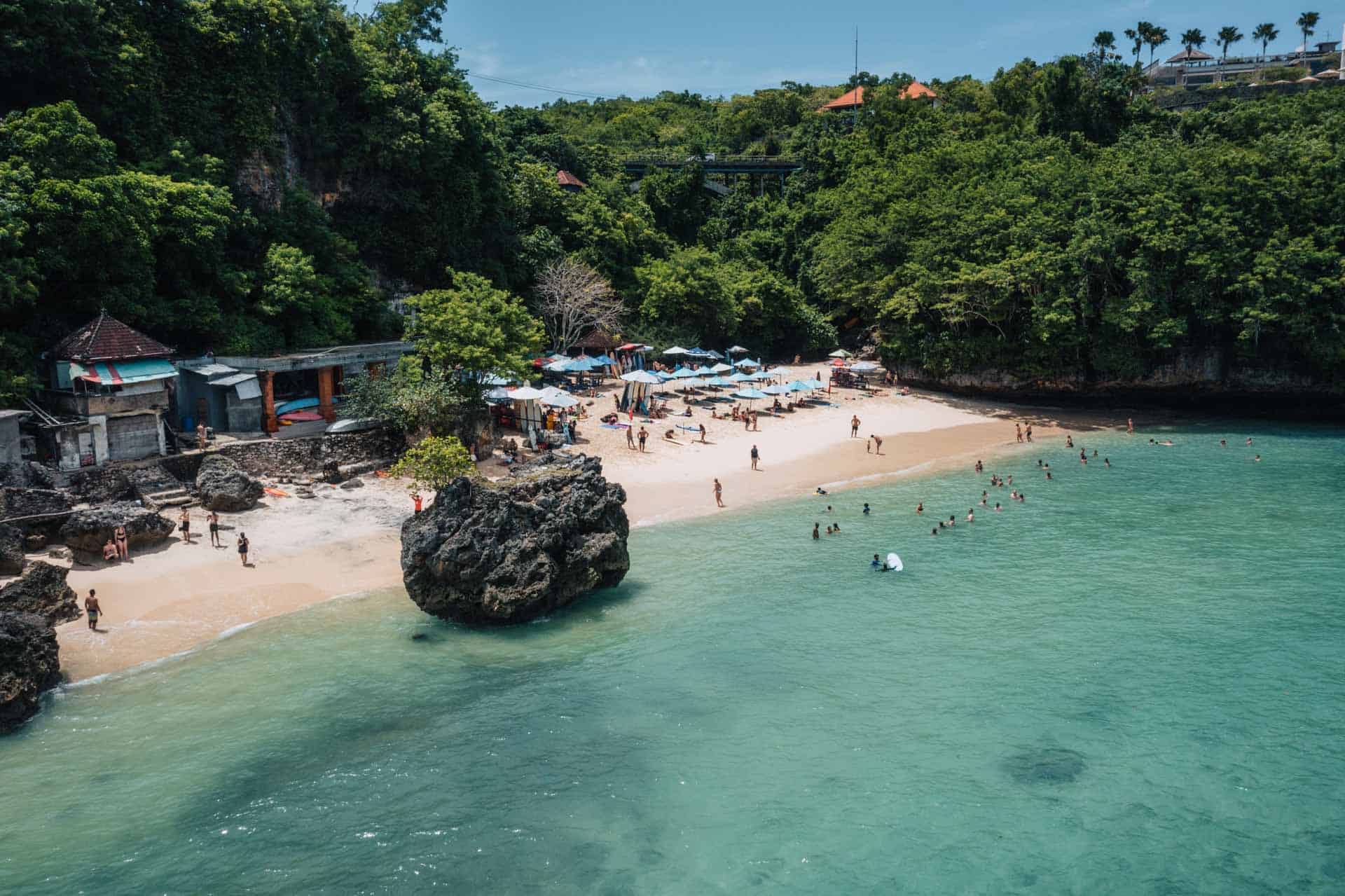
A cliff-lined cove beach popular for surfing and swimming, distinct from the temple's clifftop setting.
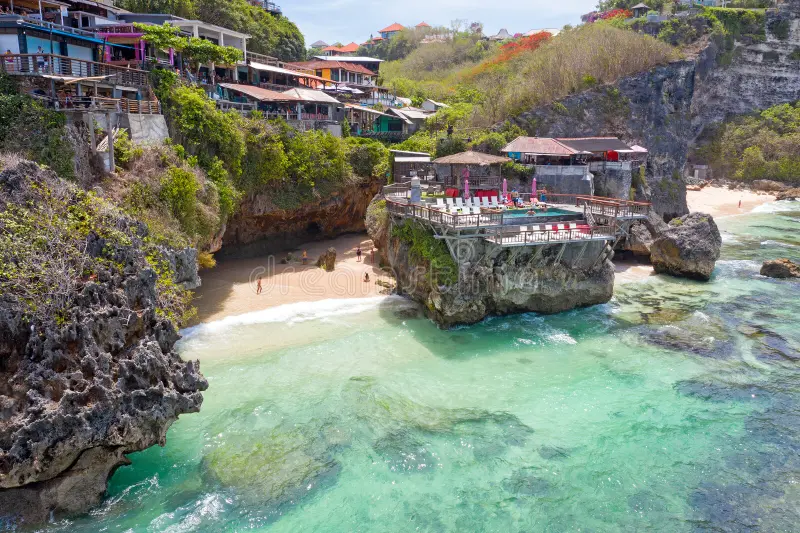
A cave-access beach beneath limestone cliffs known for surf breaks and sunset photography.
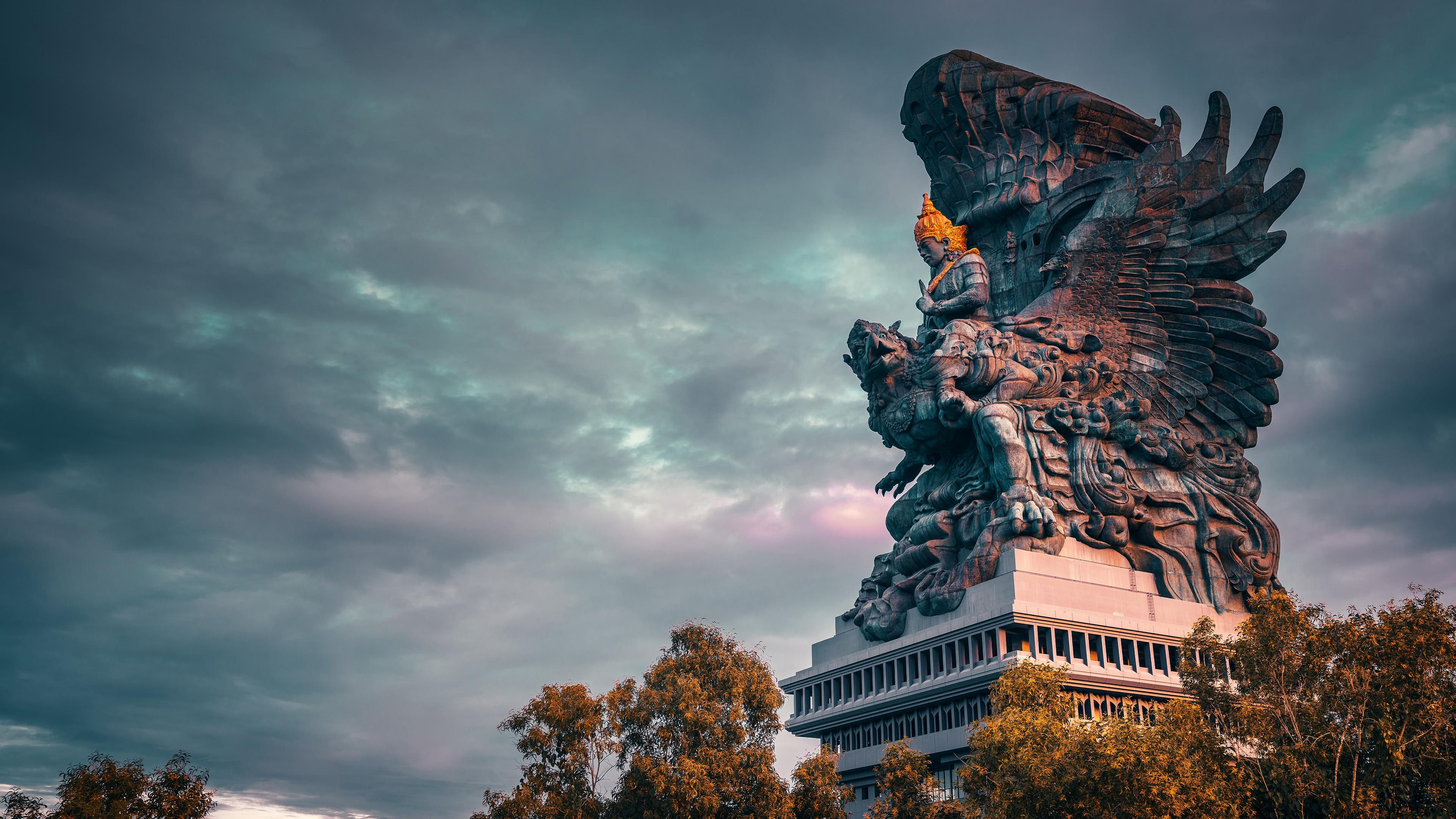
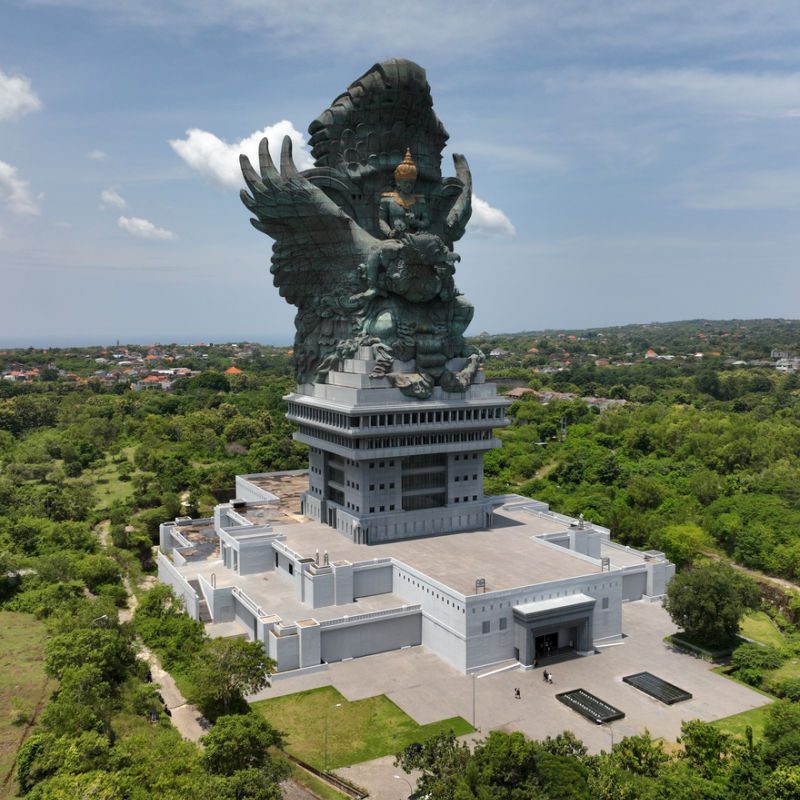
A large cultural park centered on a giant statue of Vishnu riding Garuda, with open-air theaters and gardens.
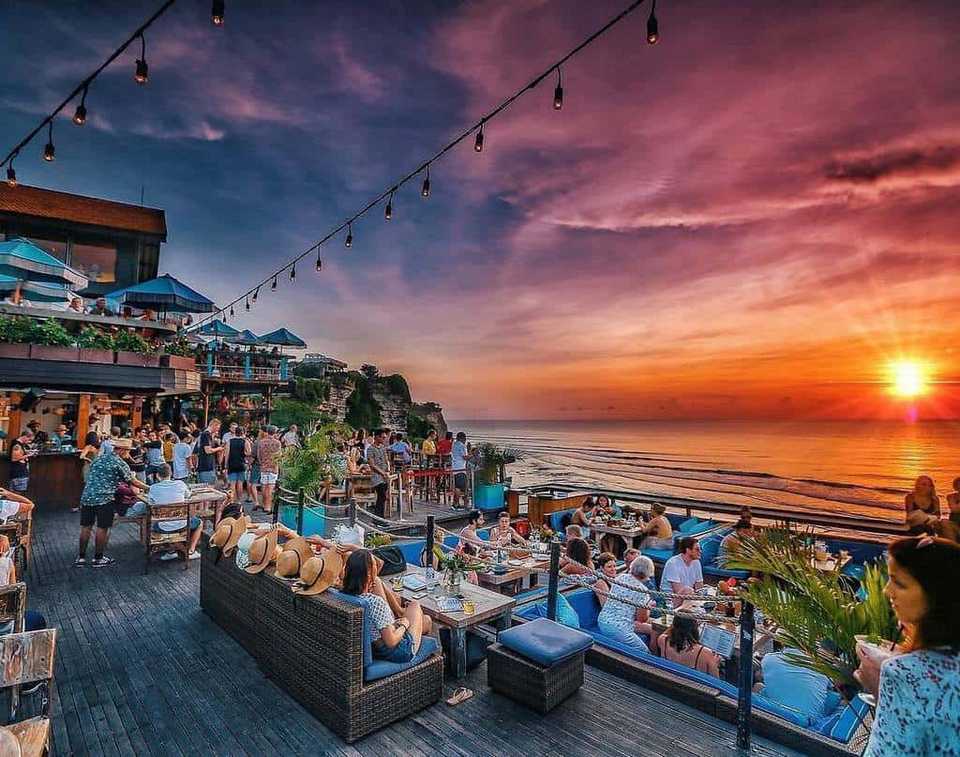
A clifftop bar overlooking a surf break, popular for watching waves and sunset outside temple hours.
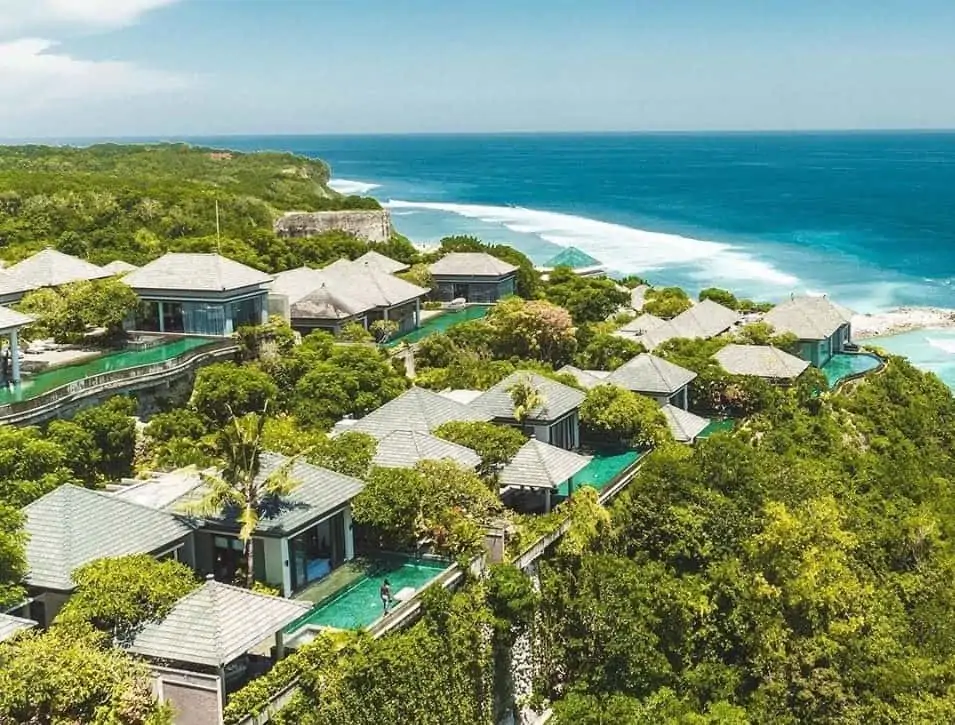
A cliffside residential area with villas overlooking the Uluwatu coastline, a common base for temple visits.
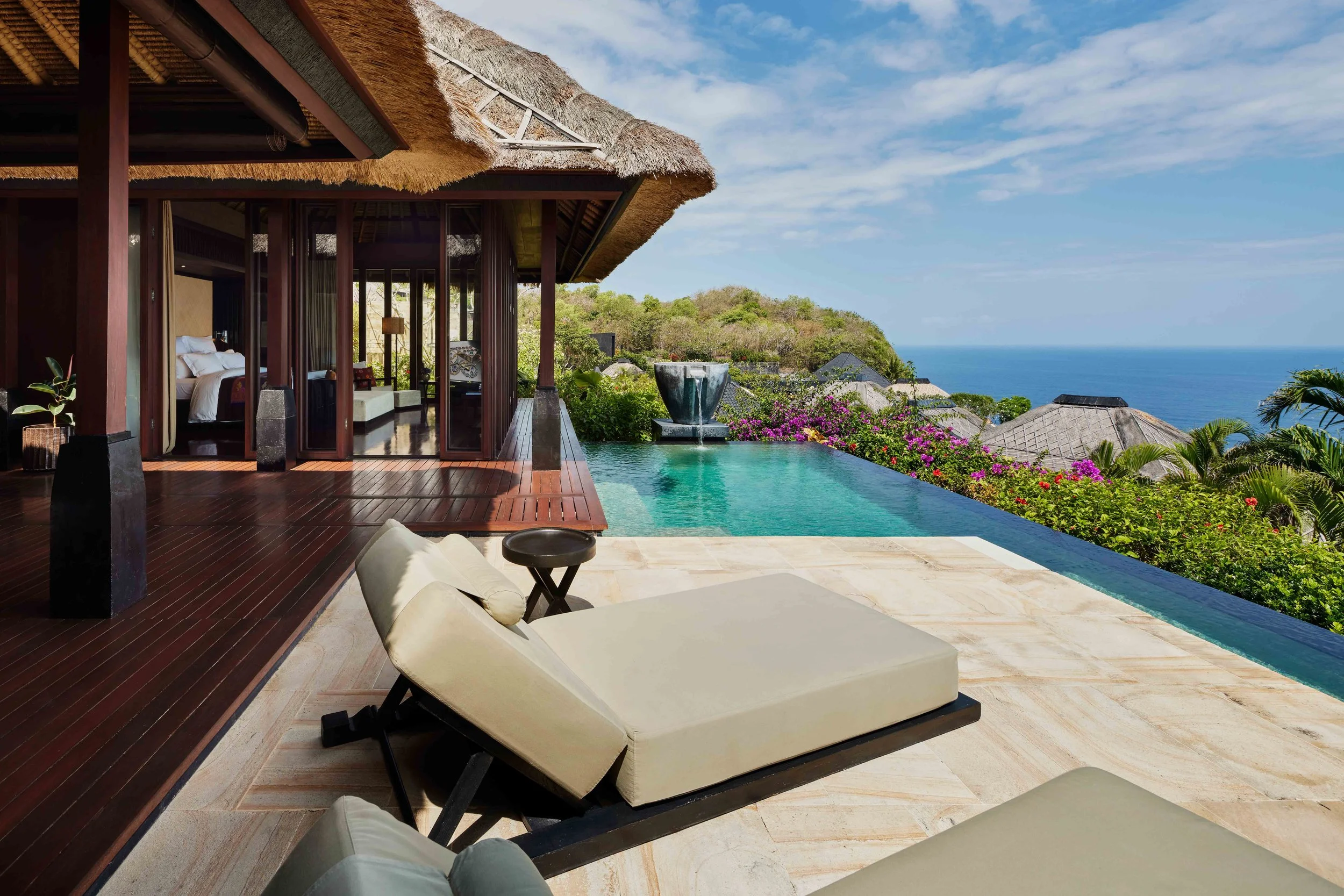
A clifftop resort known for private villas and ocean-facing infinity pools near Uluwatu.
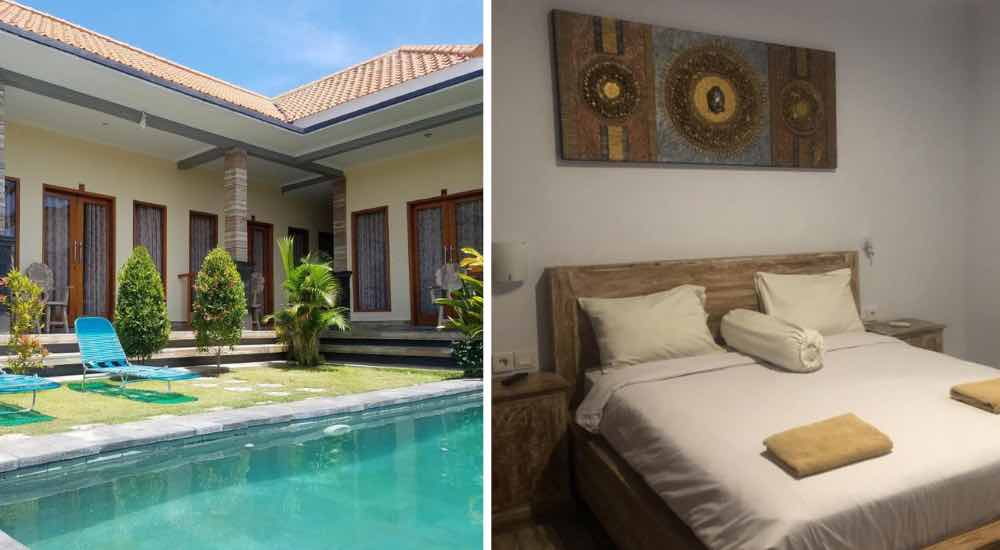
Small guesthouses and homestays clustered near the surf beaches below the temple.
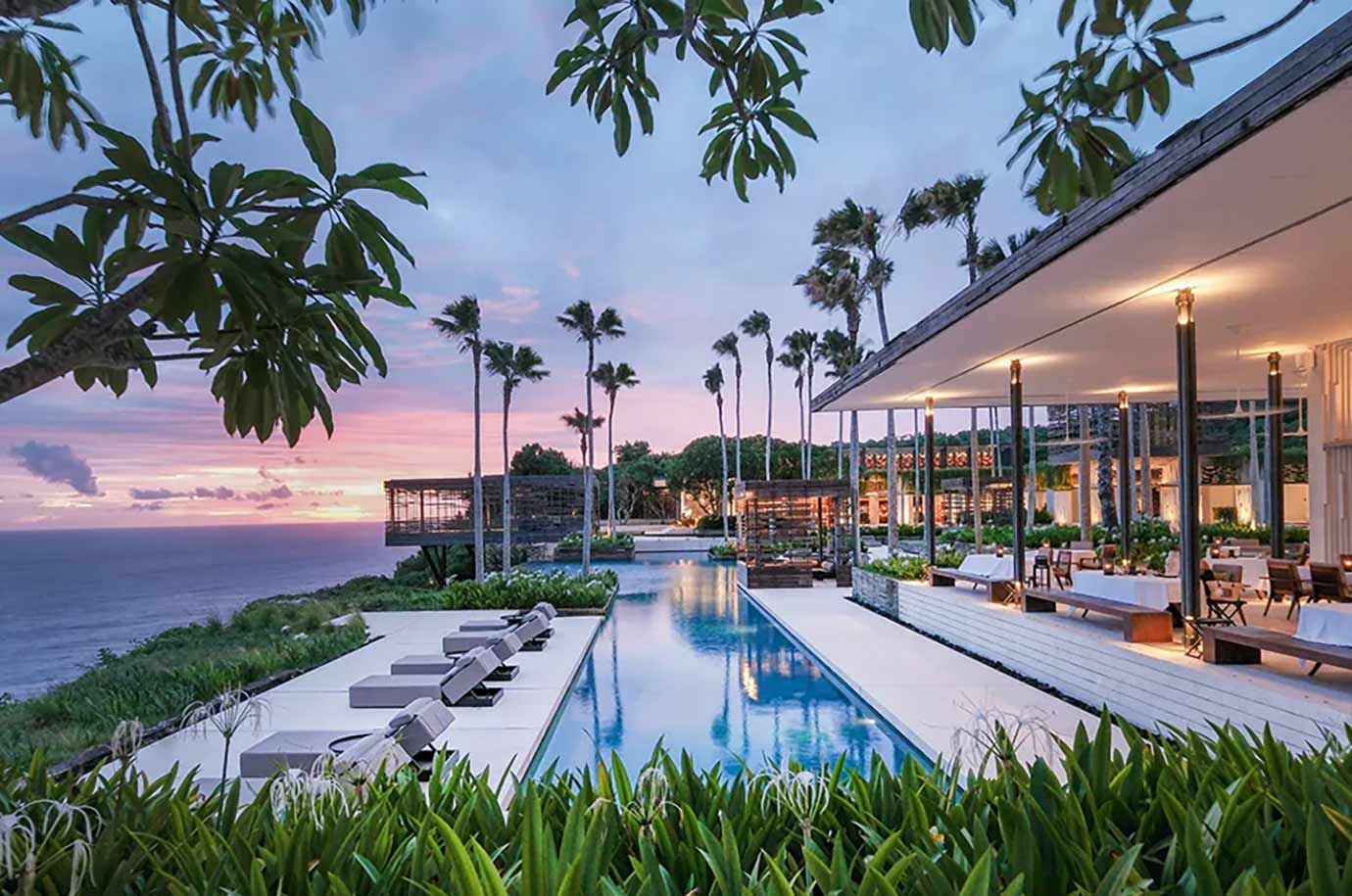
A design-focused clifftop property with limestone architecture close to the temple grounds.
Join thousands of happy travelers who have discovered this incredible experience
Book Your Experience Now